
In a war where messages travel as far as missiles, an unexpected offer can alter the map. Hamas’s signal that it is prepared to release US‑Israeli hostage Edan Alexander landed like a flare in a darkened landscape-visible to all, decipherable to few. It immediately reverberated through negotiating rooms and newsrooms alike, raising a familiar set of questions with fresh urgency: Why now? At what price? And for whom is this move meant to speak?
The timing is no small part of the story. An overture involving a high‑profile dual national touches multiple pressure points at once-diplomatic channels, domestic politics in both Washington and Jerusalem, the morale of families and publics, and the internal calculations of a group balancing battlefield realities with the optics of restraint. Offers like this are rarely singular acts; they are signals nested within leverage games, testing the contours of ceasefire frameworks, prisoner‑exchange formulas, and the patience of mediators.
This analysis looks past the headline to the incentives and constraints shaping the proposal: the credibility of the offer, the humanitarian imperatives it invokes, the strategic messaging it advances, and the risks it poses to broader talks. It considers what the move might reveal about Hamas’s current calculus, what it demands of Israel and the United States, and how one name-Edan Alexander-can become a hinge for a much larger negotiation.
Hamas strategic calculus and the signals embedded in the release offer
Offering a single high-profile dual citizen is a calibrated move-a way to test price, probe channels, and shape the narrative without committing to a broad deal. By floating the possibility of releasing Edan Alexander, Hamas is likely signaling to Washington that American leverage matters, while pressuring Jerusalem’s decision-makers to show flexibility. It also reframes humanitarian optics: a discrete gesture can generate headlines, buy time, and create a controlled de-escalatory window, even as battlefield dynamics persist. In negotiation terms, this is a signal of conditional flexibility, designed to reset the bargaining range and expose fissures between international mediators and Israel’s war cabinet.
- Audience calibration: Emphasizes U.S. stake, nudging direct White House involvement.
- Price discovery: Tests what concessions are plausible without a comprehensive ceasefire.
- Humanitarian framing: Seeks reputational cover amid legal and diplomatic scrutiny.
- Channel validation: Probes the reliability of Qatar/Egypt/ICRC mechanisms and timelines.
- Domestic pressure play: Aims to sharpen Israeli public debate over swap ratios and pauses.
| Signal | Audience | Likely Ask |
|---|---|---|
| Single-Case Offer | US/Israel | Limited pause |
| Humanitarian Angle | Global media | Prisoner relief |
| Mediation Reliance | Qatar/Egypt | Guarantees |
| Proof-of-Life | Families | Access/ICRC |
Operationally, the move telegraphs a willingness to sequence concessions: proof-of-life, corridor security, third-party guarantees, and a tightly timed release window. It is equally an information operation-probing how quickly U.S. envoys can mobilize, how Israel prioritizes single-case swaps, and whether a micro-pause can be converted into a broader transactional arc. The risks are symmetrical: a failed handoff erodes credibility and hardens positions; a successful one could shift expectations for future swaps and redefine the swap ratio baseline. The subtext is about tempo control-slowing the clock, restructuring incentives, and mapping the edges of acceptability without committing to a comprehensive cessation of hostilities.
- Accelerants: Verified guarantees, narrow ceasefire windows, immediate medical access.
- Tripwires: Battlefield escalations, leaks on terms, domestic backlash on ratios.
- Validation cues: Concrete timelines, named guarantors, transparent handover protocols.
- Red lines (implied): Broad ceasefire preconditions or large-scale releases without reciprocity.
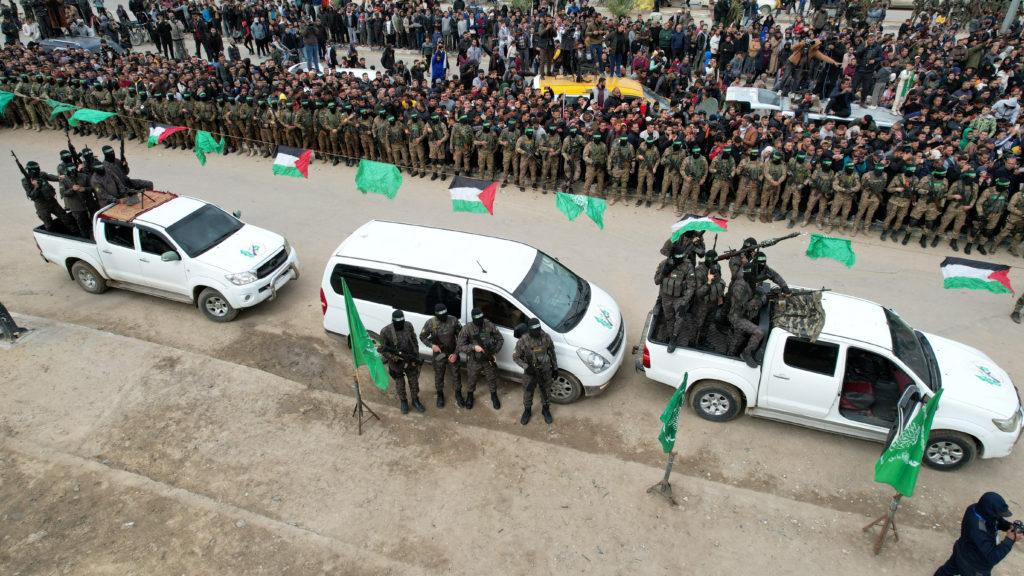
Audience targeting in Gaza Israel and the United States and how narratives are shaped
Across Arabic, Hebrew, and English ecosystems, the same gesture-the reported offer to free US‑Israeli hostage Edan Alexander-splinters into tailored storylines. In Gaza-facing channels, messaging leans on siege endurance and prisoner symmetry; in Israel, it pivots to deterrence calculus and proof-of-life urgency; in the United States, it seeks policy leverage through humanitarian optics. Platforms and gatekeepers matter: Telegram rooms emphasize immediacy and factional credibility, Israeli prime-time spotlights security framing, and U.S. cable and newsletters foreground bipartisan pressure. The result is a choreography of frames-humanitarian concession, strategic bargaining, and reputational laundering-that travel differently depending on audience pain points and media tempo.
- Gaza: Exchange parity, siege relief, collective cost.
- Israel: Duty of return, deterrence, operational timelines.
- United States: Protection of citizens, mediation wins, electoral optics.
| Audience | Primary Channels | Dominant Frame | Intended Effect |
|---|---|---|---|
| Gaza | Telegram, local radio | Mutual release | Morale + legitimacy |
| Israel | TV news, WhatsApp | Security-first | Pressure negotiators |
| United States | X, cable, think tanks | Humanitarian | Policy leverage |
Actors shape these narratives with tactical choices: selective video snippets, family testimonies, lawyered language around IHL, and timing drops to coincide with cabinet meetings or Hill votes. Influencers amplify frames; officials seed deniability; NGOs translate trauma into metrics. Micro-targeting turns the hostage’s identity into a prism-American passport for DC corridors, Hebrew name for Israeli cohesion, proximity to earlier swaps for Gazan resilience. What looks like a single diplomatic gesture is thus engineered across feeds to move three needles at once: international legitimacy, domestic resolve, and negotiation price.
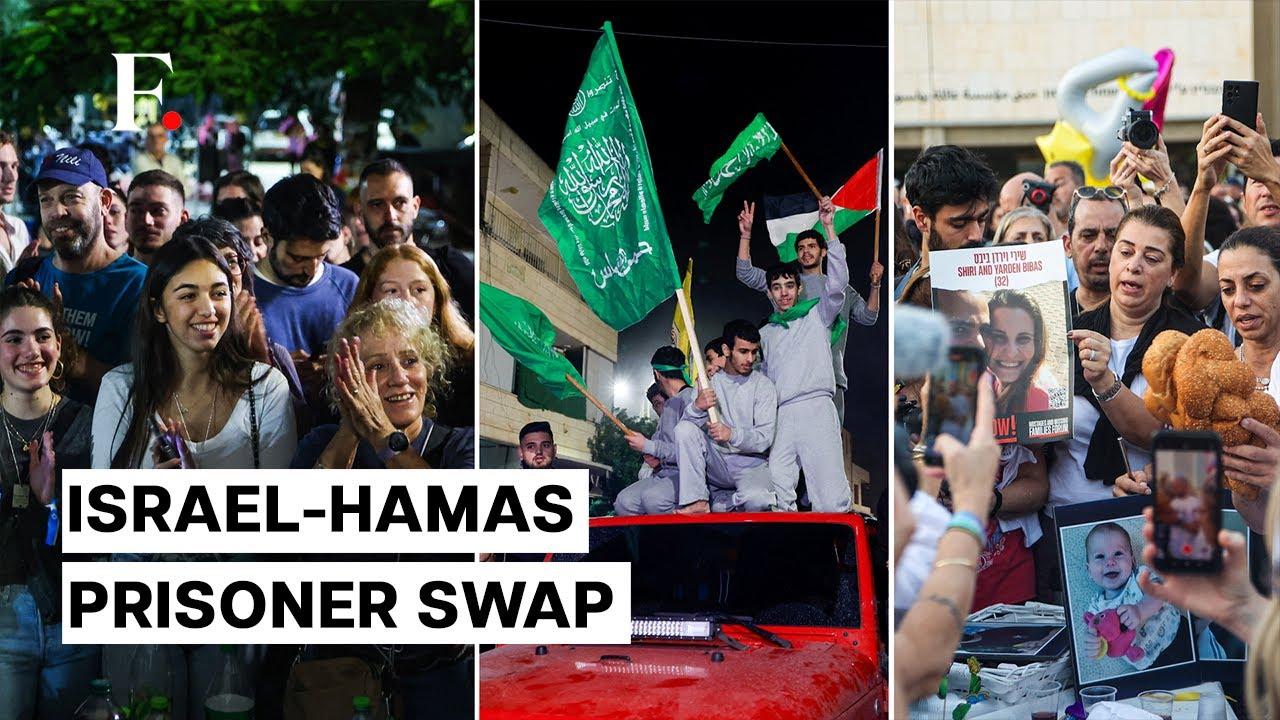
Effects on ceasefire diplomacy prisoner swaps and humanitarian corridors
Hamas’s selective overture to free a dual-national hostage functions as a precision tool in negotiations: it tests U.S. engagement, pressures Israel’s coalition, and probes mediator bandwidth in Doha and Cairo. By shifting the focus from a comprehensive package to a high-visibility single case, the move can re-sequence talks-from “all-for-all” formulas toward phased micro-deals linked to time-bound pauses, verification steps, and corridor access. If calibrated carefully, a narrowly tailored release can unlock humanitarian quiet hours, joint deconfliction updates, and corridor guarantees tied to proof-of-life milestones and Red Cross monitoring-without forcing either side into permanent ceasefire language. Yet the same tactic risks fragmenting leverage, complicating linkage between hostage categories and detainee lists, and raising the “price” of any broader cessation.
Operationally, a single-case trajectory incentivizes granular sequencing: limited pauses for transfer; discrete inspection and medical protocols; incremental corridor openings for fuel, medical evacuations, and food convoys; and third‑party escrow mechanisms (e.g., Qatar/Egypt plus ICRC) to certify compliance. It can normalize deconfliction hotlines and deliverables-convoy windows, crossing slots, GPS-tracked routes-while keeping final-status issues deferred. But it also creates asymmetry: domestic audiences may read movement on one hostage as precedent for preferential deals, and mediators must prevent a slide into transactional cherry‑picking that sidelines vulnerable groups or undermines a comprehensive prisoner framework. The balance point is a laddered approach-pilot release, corridor expansion, ratio testing-woven into verifiable benchmarks that can scale without collapsing into zero‑sum theatrics.
- Leverage shift: Moves bargaining from bulk exchanges to high-impact, time-sensitive swaps.
- Verification gains: Enables practical tests of monitoring, handover sites, and convoy safety.
- Humanitarian lift: Opens space for fuel and medevac corridors under pause windows.
- Political risk: Fragmented deals may weaken momentum for a broader ceasefire framework.
- Mediator calculus: Qatar/Egypt/ICRC coordination becomes the hinge for scaling small wins.
| Track | Short-Term Effect | Risk | Opportunity Window |
|---|---|---|---|
| Ceasefire Pauses | Targeted quiet hours | Pause slippage | Handover day +48h |
| Prisoner Swap | Phased ratios | Precedent inflation | Case-by-case |
| Humanitarian Corridors | Convoy scaling | Route sabotage | Verified windows |
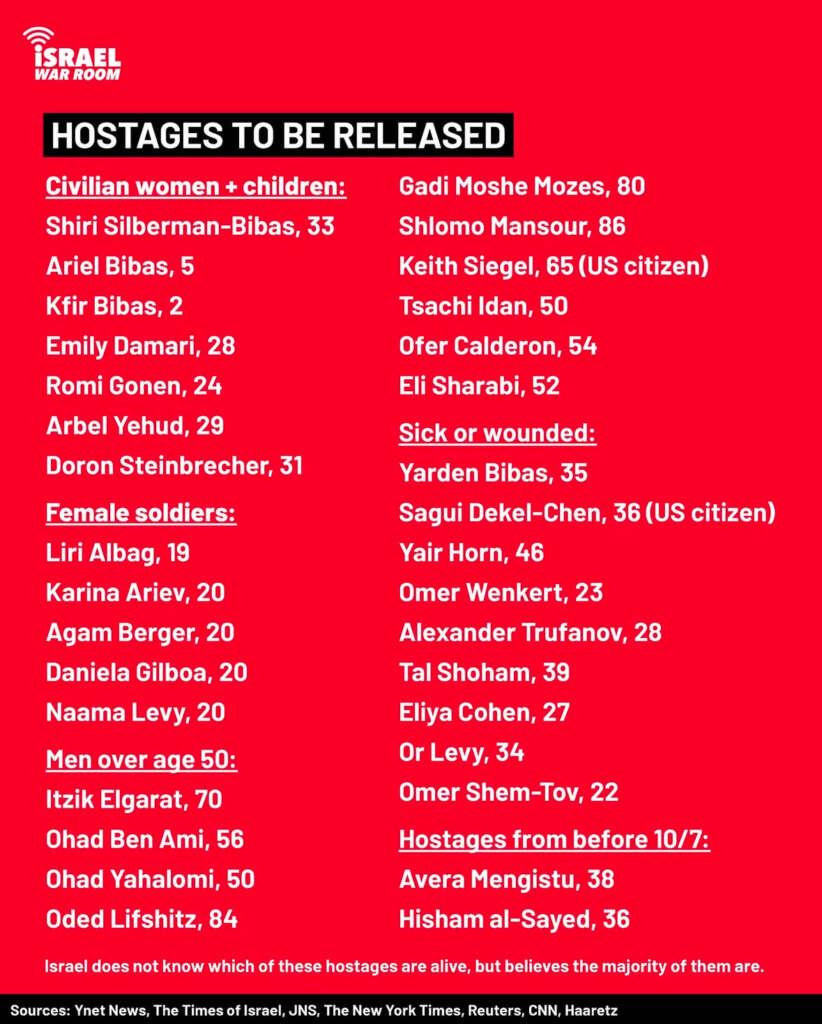
Actionable steps for mediators and policymakers to validate intent protect the hostage and maintain leverage
To move beyond rhetoric and into verifiable progress, mediators should insist on layered validation while placing the hostage’s welfare at the center of every exchange. Demand concrete, falsifiable signals and keep the chain of verification in neutral hands. Safeguards must be practical, fast, and insulated from propaganda cycles so that proof does not become a bargaining chip and welfare does not hinge on performative gestures. The goal is a narrow, disciplined process: confirm readiness, confirm capacity, confirm control-without paying twice in time and leverage.
- Multi-factor proof-of-life: Time-stamped, location-obscured evidence vetted by a neutral third party, plus a private question/answer known only to family to deter fabrication.
- Independent medical check: Swift examination and treatment facilitated by a trusted NGO, with sealed medical reporting to protect privacy and preclude media exploitation.
- Secure, singular channel: One authorized conduit for messages to reduce spoofing and mixed signals; all materials logged with a verifiable chain of custody.
- Micro-commitments first: Low-risk, same-day steps (communication windows, health updates) before any logistics shift; each step validated before the next begins.
- Deconfliction bubble: Narrow, time-bound safety corridors tied only to verification actions, preventing broad ceasefire claims that erode leverage.
Preserving leverage means designing incentives that are reversible, transparent, and proportionate-rewarding compliance without front-loading irreversible concessions. Policymakers should anchor the process in multilateral oversight, pre-agreed snapbacks, and a communications posture that privileges accuracy over speed. Calibrated benefits for verified steps, coupled with credible, lawful consequences for non-compliance, can keep the pathway focused on results rather than spectacle.
- Phased, reversible incentives: Incremental humanitarian access or facilitation paired with each verified milestone; nothing large or strategic released upfront.
- Multilateral guarantors: Third-party monitors (e.g., ICRC-linked mechanisms) to certify compliance, document breaches, and arbitrate disputes quickly.
- Pre-set snapback clauses: Automatic reversion of any offered facilitation if timelines or conditions lapse, removing ambiguity and debate.
- Evidence-first publicity: Public statements lag verification; one spokesperson, one narrative, to limit disinformation and protect the hostage from media pressure.
- Defined end-state and off-ramps: A clear release pathway with lawful contingency options reserved if talks stall-communicated privately to avoid escalation incentives.
To Conclude
In the end, the offer to release Edan Alexander sits at the intersection of leverage, optics, and timing. It signals outward-to Washington, Jerusalem, and regional mediators-as much as it speaks inward to constituencies and rival factions. Whether it is a tactical feint, a calibrated probe of U.S. and Israeli resolve, or a narrow opening in a crowded negotiating corridor will be tested by what follows: verifiable terms, coordinated mediation, and the willingness of all sides to translate rhetoric into action. For policymakers, it is another piece on a shifting board; for the families, it is the longest hour. The coming days will reveal whether this gesture becomes a pivot point or another echo in a conflict where symbols travel faster than substance. Either way, the calculus behind it underscores a simple truth: every move on the diplomatic chessboard is ultimately measured against the fate of a single life.