
Before Yahya Sinwar returned to Gaza in a 2011 prisoner exchange, Hamas was often described as a triptych: a political party, a social movement, and an armed organization held together by a wary balance. A decade later, that balance has been reset. Under Sinwar’s watch, say analysts and insiders alike, the movement’s center of gravity shifted-away from the visible machinery of party politics and social services and deeper into the secrecy of its military underground. What emerged, in the words of some who have watched him up close, is “a completely different movement.”
This transformation was less a sudden break than a strategic reweaving. Sinwar’s years in prison shaped his understanding of organization, loyalty, and message discipline; his tenure in Gaza refined his use of ambiguity, compartmentalization, and leverage. Decision-making tightened even as battlefield tactics dispersed. Governance was not abandoned so much as subordinated, fused with the needs of an insurgent campaign. External alliances were recalibrated, internal hierarchies redrawn, and the line between political leadership and the Qassam Brigades blurred to the point of near-erasure.
This article traces how that revolution took form: the methods that enabled it, the networks that sustained it, and the consequences-regional, strategic, and human-that have followed. It examines the myths that surround Sinwar, the constraints he exploited, and the choices that remade Hamas’s identity. Above all, it asks what kind of movement now stands in his wake, and what that means for a conflict transformed alongside it.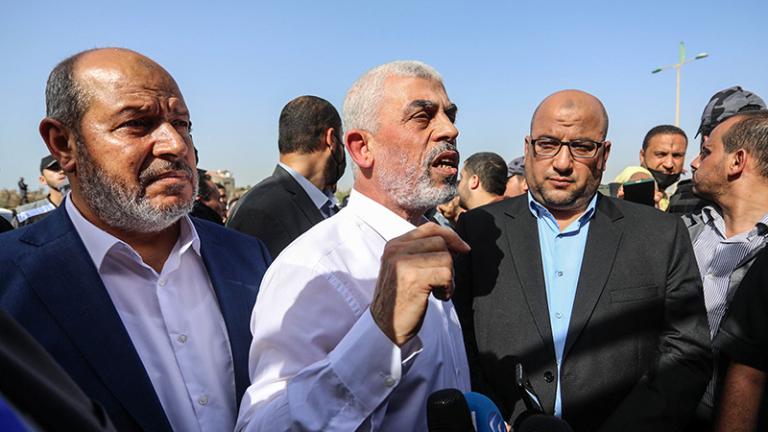
Sinwar and the blueprint for a different Hamas movement: leadership centralization, cross factional bargaining and the calculus of confrontation
Centralization under Sinwar reconfigured Hamas from a web of semi-autonomous fiefs into a tighter pyramid, where strategy and logistics flowed through a compact inner circle. He blurred the line between the political bureau and Qassam’s field command, creating a hybrid command that compressed deliberation time and hardened message discipline. Patronage shifted from broad consensus-building to performance-based allocation: units and social-service arms that delivered operational or governance gains received priority in funds, cover, and smuggling bandwidth. The result was a shorter chain of accountability-a system that could snap from clandestine restraint to overt action without telegraphing intent, while preserving deniability through layered intermediaries and localized fronts.
| Lever | Objective | Risk | Signal |
|---|---|---|---|
| Intra-faction deals | Quiet borders | Elite rivalry | Unity optics |
| Prisoner files | Strategic swaps | Public backlash | Resolve + costs |
| Calibrated fire | Deterrent pricing | Escalation spiral | Red-line testing |
| Humanitarian valves | Political oxygen | Legitimacy strain | Governance claim |
Externally, he treated rival factions and regional patrons as a marketplace, brokering cross-factional bargains that traded ceasefire discipline and border calm for influence, funds, and access-without surrendering primacy. This fed a meticulous calculus of confrontation: periodic brinkmanship to reset deterrence and extract concessions, alternated with tactical pause to consolidate legitimacy in local governance. Decision thresholds were defined less by ideology than by price-a running ledger of casualties, economic pressure, diplomatic tolerance, and domestic cohesion-allowing the leadership to pivot between clandestine buildup and sudden rupture while keeping the coalition tent intact.
- Transactional trucecraft: limited lulls swapped for economic relief and political space.
- Distributed escalation: proxy fronts and deniable cells to vary intensity without full commitment.
- Symbolic surplus: prisoner portfolios and border optics leveraged for narrative advantage.
- Adaptive deterrence: measured strikes to test thresholds, then retract before strategic overrun.

The organizational revolution on the ground: networks, financing, social services and information control under siege conditions
Under sustained pressure, the ground architecture shifted from a brittle pyramid to a redundant mesh that blends civil, clandestine, and commercial strands. Command became modular and compartmentalized, with local committees and service providers doubling as logistical relays, while neighborhood nodes handled micro-governance and dispute resolution to keep daily life moving. Financing likewise diversified: instead of a single pipeline, a portfolio of flows-from localized fees and trade levies to diaspora remittances and episodic charitable streams-reduced exposure to disruption. The resulting ecosystem is less about central showpieces and more about quiet continuity: small warehouses, rotating couriers, and community treasurers that survive attrition by being ordinary.
- Networks: cell-based hubs, interchangeable roles, civic fronts that mask logistical depth
- Financing: fragmented income (municipal charges, trade tolls, small-donor inflows) to hedge enforcement risk
- Logistics: micro-stockpiles, short-haul routes, low-signature procurement instead of bulk convoys
- Governance-by-proxy: professional guilds, neighborhood elders, and faith institutions as stabilizers
Service delivery and information governance converged into a single doctrine: legibility inward, opacity outward. Scarcity planning emphasized ultra-local clinics, ration cards, and mobile relief points, all coupled with data ledgers that track households and aid eligibility. Messaging and counter-messaging tightened: layered communications (face-to-face couriers, closed radios, controlled digital bursts) limited metadata exposure, while rumor control and media choreography sought to shape perceptions without flooding channels. In practice, the model trades scale for resilience under siege, privileging what can be reassembled overnight over what can be showcased.
- Social services: pop-up clinics, rotating kitchens, shelter co-ops tied to resident registries
- Information control: compartmentalized comms, verified spokes-nodes, rapid rumor triage
- Aid allocation: household scoring, queue tokens, ward-level ombuds for grievance redress
- Risk discipline: minimal digital footprints, time-boxed transmissions, need-to-know briefs
| Pillar | Tool | Trade-off |
|---|---|---|
| Networks | Redundant hubs | Slower consensus |
| Financing | Multi-source flows | Complex oversight |
| Services | Mobile delivery | Limited capacity |
| Information | Layered channels | Fragmented reach |
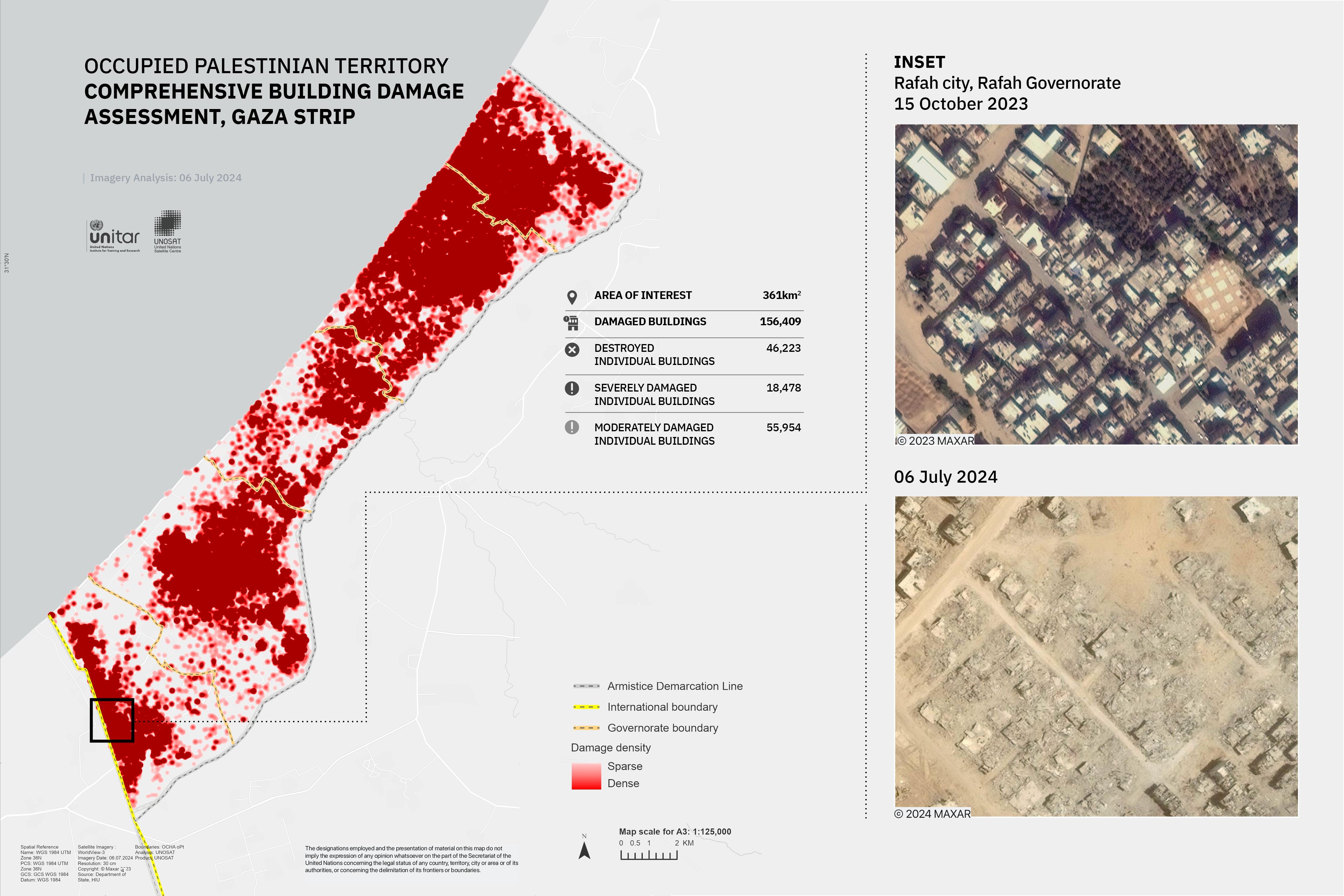
Measuring consequences for Gaza and the region: humanitarian baselines, escalation triggers and the shifting role of external patrons
Humanitarian baselines in Gaza have shifted from scarcity-with-structure to scarcity-without-schedule, a transformation that mirrors Sinwar’s wager on attrition over administration. Measuring the drift requires pairing ground indicators with political context: electricity availability as a proxy for municipal coherence; border fluidity as a surrogate for diplomatic bandwidth; and hospital throughput as a signal of system resilience. Below, a compact dashboard translates complex movement into trackable cues, while keeping sight of how the leadership’s doctrine reframes what counts as “acceptable costs” to maintain strategic autonomy.
| Indicator | Baseline (pre-shock) | Trigger (alerts) | Trend |
|---|---|---|---|
| Electricity supply | Scheduled outages | Prolonged near-blackout | Volatile |
| Border crossings | Regular openings | Extended closure | Intermittent |
| Pediatric malnutrition | Low, monitored | Sustained spike | Rising risk |
| Hospital capacity | Majority functional | Rationed wards | Stressed |
| Displacement | Localized | Multi‑wave massing | Elevated |
- Escalation triggers to watch: cross‑border misfires that test red lines; targeted killings beyond Gaza; week‑long aid corridor ruptures; tightening financial strangulation; major-casualty incidents around holy sites; and competing factional claims over ceasefire terms.
- Stabilizers include quiet deconfliction channels, currency liquidity for basic staples, and predictable fuel corridors for desalination and hospital generators.
As external patrons recalibrate, the patronage triangle-money, mediation, materiel-tilts with each battlefield signal. Iran seeks leverage through deniable supply and tempo control; Qatar prioritizes liquidity and message space; Egypt guards the gate and the neighborhood; Turkey amplifies diplomatic pressure; and smaller actors shuttle humanitarian guarantees. The Sinwar-era structure, more networked than hierarchical, exploits this plurality to prevent any single sponsor from dictating endgames. Watch for three inflection points: shifts in conditionality attached to funds and crossings; recalibrated deterrence by regional militias tethered to-but not owned by-Tehran; and emergent truce architectures that tie prisoner exchanges to infrastructure immunity. Together, these signals map a conflict ecology in which aid metrics double as political barometers, and every logistical corridor is a negotiating table in disguise.
Recommendations for policymakers and civic actors: calibrated leverage, humanitarian access guarantees, intra Palestinian reconciliation incentives and accountability safeguards
Responding to the movement’s strategic mutation requires policy tools that are precise, reversible, and insulated from humanitarian harm. Build a ladder of leverage that ties diplomatic recognition, reconstruction finance, and cross-border facilitation to verifiable steps: de-escalation benchmarks, civilian-protection commitments, and transparent municipal service delivery. Protect civilians by ring‑fencing aid through humanitarian access guarantees that survive political shocks-permanent deconfliction channels, corridor monitoring, and third‑party logistics-aided by open data so communities can see where relief actually flows. Pair conditionality with credible off-ramps (e.g., time-bound easing for compliance) and snapbacks for violations, ensuring signals are clear and consistent rather than maximalist and counterproductive.
- Calibrated leverage: staged incentives, measurable benchmarks, automatic snapbacks.
- Access guarantees: protected corridors, independent monitoring, standardized inspection windows.
- Data integrity: public dashboards on aid movement, third‑party verification, grievance channels.
- Community shielding: sanctions carve‑outs, escrowed payments to service providers, prepaid lifeline utilities.
Incentivize intra-Palestinian reconciliation through tangible, non-zero‑sum gains: municipal budget support tied to joint service compacts; civil‑service payroll integration under vetted oversight; and a sequenced election track grounded in code-of-conduct guarantees against coercion. Embed accountability safeguards-rights-based vetting, end‑use monitoring, and incident review-so that engagement reshapes incentive structures without legitimizing abuses. Civic actors can widen the social bandwidth for compromise by convening professional syndicates, women’s networks, and youth councils around deliverables-water, health, livelihoods-while watchdogs and ombud mechanisms keep all parties on record and on timeline.
- Reconciliation incentives: joint utilities, shared revenue rules, international backstopping of payroll and audits.
- Safeguards: independent ombuds, rights screening, incident-tiered penalties, transparent case closure.
- Civic architecture: plural forums, service scorecards, protection for mediators and journalists.
| Tool | Purpose | Trigger | Fallback |
|---|---|---|---|
| Staged Aid Tranches | Behavioral incentives | Verified de-escalation | Snapback + escrow |
| Protected Corridors | Uninterrupted relief | Deconfliction protocol | Third-party convoy control |
| Joint Service Compacts | Local cooperation | Shared delivery targets | Budget reallocation |
| Rights Vetting | Accountability | Incident reporting | Tiered penalties |
In Conclusion
In reshaping chains of command, tightening the circle of trust, and merging clandestine governance with calibrated confrontation, Sinwar shifted Hamas’s center of gravity. Whether read as adaptation or rupture, the change is unmistakable: a movement reengineered around secrecy, endurance, and leverage. The consequences radiate beyond its own ranks.
Revolutions inside organizations rarely end with their architects. Siege, war, and succession will test the innovations he embedded-discipline, compartmentalization, a wartime economy, a new grammar of power. What endures and what unravels will help define not only Hamas’s trajectory, but the political landscape around it.
That leaves an open question at the heart of this story: after Sinwar, is there a path back to what Hamas once was, or only forward into something else? The answer is still being written-in tunnels and courtrooms, in Gaza’s streets and regional capitals, in the calculations of allies and adversaries alike. A completely different movement has already taken shape; what it becomes next will be decided by forces larger than any one man.