
In a conflict where every proposal is weighed against years of pain and politics, Saudi officials have reportedly drawn two clear lines for Gaza’s future: Hamas must not govern, and Palestinians must not be forced from their homes. The outline, emerging amid relentless violence and deepening humanitarian strain, sketches a framework that seeks to pair security with dignity-removing a militancy-led administration while rejecting displacement as a solution. Cast against a backdrop of urgent diplomacy spanning regional capitals and global allies, the plan gestures toward reconstruction, stability, and a political path that avoids reopening the scar of mass relocation. Whether it becomes a workable roadmap or another unrealized draft will depend on military developments and negotiations still in motion. For now, it signals Riyadh’s stated parameters for any postwar order: a Gaza no longer ruled by Hamas, and a population anchored in place.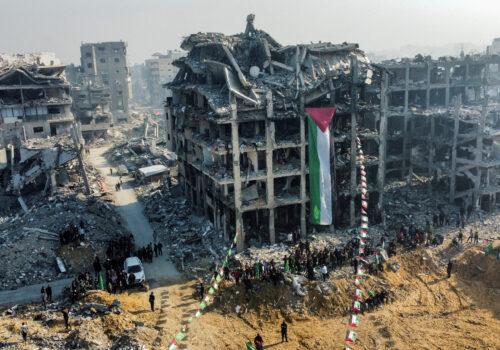
Saudi framework centers on removal of Hamas from power while rejecting any forced relocation
Saudi interlocutors describe a pathway that prioritizes civilian protection and a rebalanced governance structure in Gaza, pairing the end of militia-led administration with a transition to a Palestinian-led, technocratic authority backed by regional and international partners. The approach underscores accountability, respect for international law, and firm guarantees that population movements remain voluntary, temporary, and locally supervised, rejecting any policy that resembles mass displacement. It also links reconstruction to credible security arrangements that dismantle armed command networks without erasing essential public services.
- Governance reset: Administrative and revenue levers shifted to an interim, Palestinian-led technocratic body.
- Security safeguards: Coordinated, time-bound stabilization under Arab-international oversight with clear exit criteria.
- Humanitarian primacy: Scaled aid corridors, protection of medical infrastructure, and monitored civilian movement.
- No forced relocation: Property rights and residency status preserved; return and reunification facilitated.
- Reconstruction-for-compliance: Funding tied to ceasefire durability, detainee/hostage arrangements, and legal benchmarks.
Implementation, officials suggest, would proceed in sequenced steps to reduce shocks and maintain local consent, with benchmarks that unlock economic support and governance capacity. A compact among regional states, international donors, and Palestinian institutions would anchor the process, while a limited, mandate-driven presence helps secure crossings, deconflict aid delivery, and prevent armed regrouping. The framework leans on transparent oversight, measurable timelines, and a compact that privileges civilian rights over wartime expediency.
| Phase | Focus | Key Actors |
|---|---|---|
| 1. Stabilize | Ceasefire, aid surge | UN, Egypt, NGOs |
| 2. Transition | Technocratic authority | Palestinian institutions, Arab states |
| 3. Secure | Disarm command nodes | Arab-intl. mission |
| 4. Rebuild | Infrastructure, jobs | Donors, IFIs |
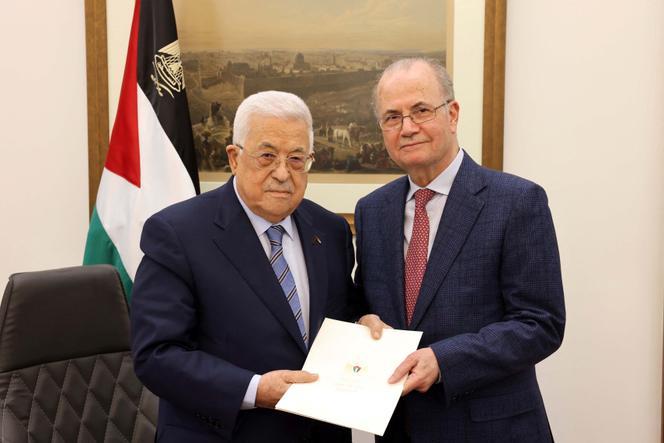
Transitional governance led by a technocratic Palestinian cabinet with Arab security presence and international monitoring
Pragmatic stewardship would prioritize competent service delivery over factional politics, with a nonpartisan Palestinian cabinet mandated to stabilize institutions, reopen revenue channels, and uphold a clear ban on forced displacement. An Arab security presence, invited and time-bound, could secure crossings, critical infrastructure, and demilitarized buffer zones while integrating vetted local policing. Parallel international monitoring-civilian and technical-would verify compliance on humanitarian access, detainee protections, and reconstruction standards, publishing transparent benchmarks that de-escalate rhetoric and center measurable outcomes.
- Immediate priorities: restore power/water, clear UXO, reopen hospitals, protect aid corridors.
- Governance basics: unified payroll, independent audit, digital procurement, public budgets.
- Legal guarantees: property protection, returns framework, rights ombud with complaint hotline.
- Security contours: joint ops rooms, strict rules of engagement, community liaison units.
- Political horizon: municipal services first; electoral roadmap once security normalizes.
To avoid a vacuum, the architecture can be phased, limited, and reversible-anchored in Arab League coordination and backed by a donor compact tied to performance. A technocratic mandate would be insulated from partisan pressures, while monitors from regional and international bodies track incidents, prevent collective punishment, and certify handover milestones. Clear exit criteria-service reliability, policing capacity, and institutional integrity-ensure the security footprint shrinks as local capability grows, culminating in transfer to a reformed, representative Palestinian authority.
| Phase | Duration | Lead Actor | Oversight | Key Test |
|---|---|---|---|---|
| Stabilize | 0-90 days | Technocratic Cabinet | Intl/Arab Monitors | Basic services at 70% |
| Secure | 3-12 months | Arab Security + Local Police | Civilian Protection Unit | Incidents trend ↓ monthly |
| Reform | 6-18 months | Independent Agencies | Public Audit Boards | Clean procurement pass |
| Transfer | By milestone | Reconstituted PA | Elections Commission | Verified handover |
- Safeguards: no demographic engineering, codified property rights, monitored returns.
- Funding: escrowed tranches tied to independent verification and community feedback.
- Accountability: incident registry, public dashboards, sanction triggers for violations.
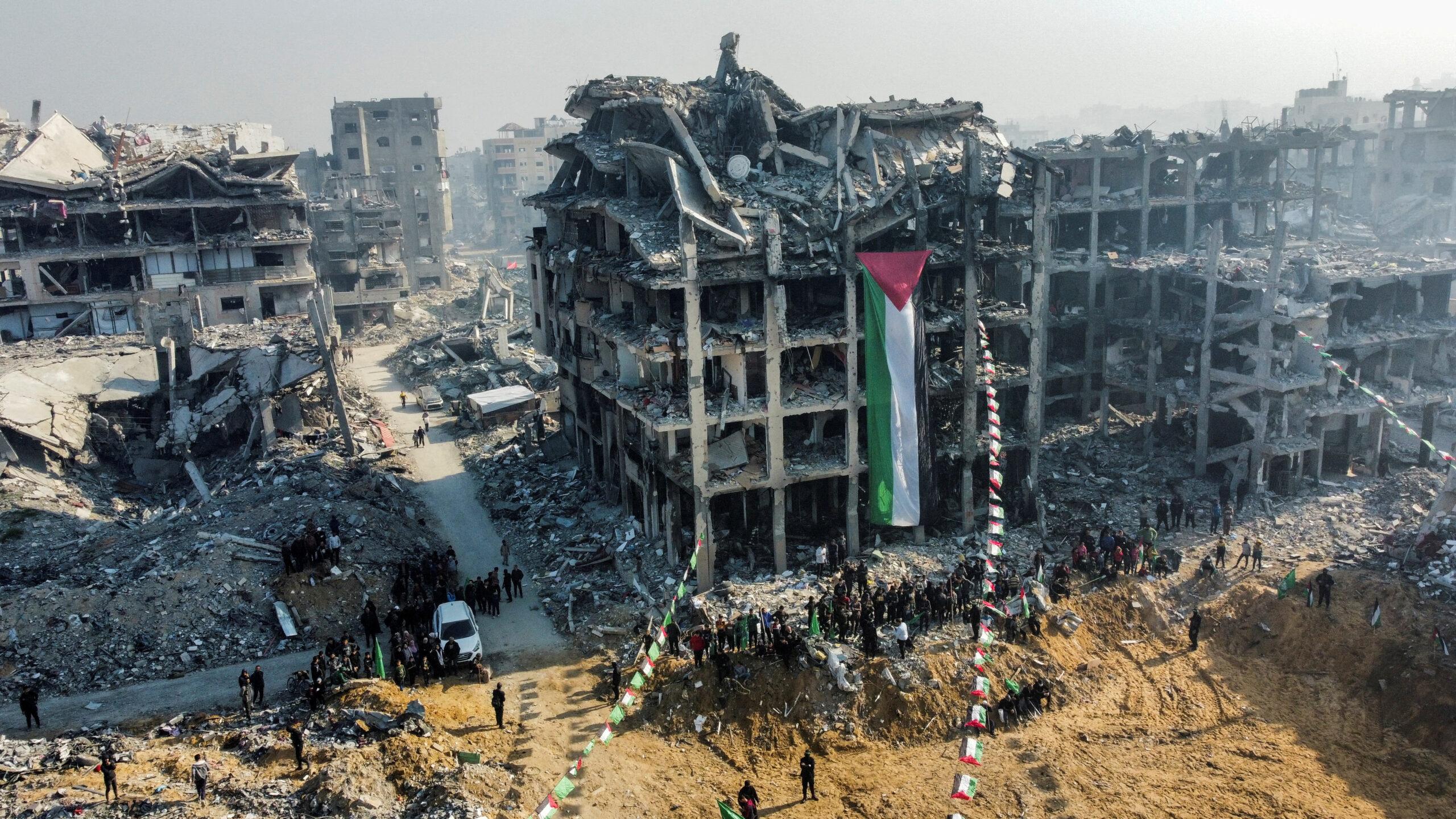
Reconstruction funds conditioned on verified ceasefire compliance border management reforms and UN audited aid delivery
Donor capital is framed as performance-based finance, released only when independent monitors confirm a durable truce and functioning borders that protect civilians and commerce. Funds move through escrow with milestone gates and automated stop-losses to prevent leakage or political capture, while a UN-audited ledger tracks every tranche from pledge to project site. To keep the process practical on the ground, compliance is defined by simple, verifiable signals rather than vague promises, and by public dashboards that make success-or slippage-visible to all stakeholders.
- Ceasefire benchmarks: zero cross-border fire; joint incident logs; third-party verification windows.
- Border reforms: single-window customs; neutral inspection teams; digital cargo seals; open API manifests.
- Aid integrity: UN Board of Auditors reviews; e-voucher delivery; vendor blacklists; beneficiary registries.
- Human safeguards: no forced relocation; site-level grievance channels; protected access for medical and education projects.
Implementation leans on clear triggers and automaticity: when specified indicators clear, money moves; when they fail, it pauses. Procurement is ring-fenced to civilian needs with open tenders, price benchmarks, and conflict-of-interest disclosures. Community oversight complements formal audits through independent hotlines, site photos, and geotagged progress checks, ensuring that reconstruction is both swift and accountable without compromising neutrality or safety.
| Milestone | Verifier | Evidence | Disbursement |
|---|---|---|---|
| 30 days verified truce | UNTSO + third-party | Incident logs, satellite checks | 20% release |
| Border single-window live | ICRC/UN OCHA | System uptime, audit trail | 25% release |
| Humanitarian corridor uptime ≥95% | NGO consortium | Sensor + convoy data | 25% release |
| UN audit clearance (quarterly) | UN Board of Auditors | Clean opinion, no major findings | 30% release |

Diplomatic track recommends prisoner exchanges expanded crossings and US and EU guarantees toward eventual normalization
Mediators are sketching a phased deal that swaps detainees for measured security calm, opening the way for larger humanitarian flows and a monitored reopening of key crossings. The exchange would be sequenced-beginning with women, minors, elderly, and medically vulnerable-under ICRC access and third‑party verification, matched to time‑bound pauses and increased aid convoys. Expanded inspection lanes, non‑intrusive scanning, and an international observer footprint aim to deconflict logistics while curbing smuggling. To anchor the process, U.S. and EU guarantees would underwrite compliance, fund reconstruction corridors, and set up a snap‑back for violations, framing a glidepath that could mature into broader regional normalization.
- Staged releases: humanitarian categories first, followed by comprehensive exchanges tied to milestones.
- Crossing capacity: daily truck targets, medical evacuation windows, pre‑cleared supply lists.
- Verification: biometric manifests, GPS‑tracked convoys, joint incident reporting.
- Compliance tools: escrowed aid tranches, sanctions snap‑back, independent auditing.
| Pillar | U.S. Role | EU Role |
|---|---|---|
| Security Assurances | Deterrence guarantees | Border mission support |
| Aid & Reconstruction | Funding backstop | Budget facilitation |
| Monitoring | Ceasefire tracking | Customs oversight |
| Accountability | Sanctions lever | Legal compliance |
| Normalization Path | Security architecture | Trade incentives |
A complementary political roadmap ties each phase to civilian protection benchmarks, governance reforms that exclude militant command structures, and an explicit bar on forced displacement. Regional actors would convene a technical contact group to coordinate crossings, maritime delivery lanes, and municipal services, while a reformed local administration-supported but not supplanted by international experts-handles essential needs. As benchmarks are met, guarantees broaden: limited economic measures expand, visas and aviation links resume, and, eventually, calibrated steps toward diplomatic normalization are triggered.
- Benchmarks: detainee accounting, cessation of rocket fire, delivery targets met.
- Governance: vetted civilian management, transparent payrolls, anti‑corruption guardrails.
- Protection: no demographic engineering, safe return protocols, school and clinic shielding.
- Normalization triggers: sustained calm, border functionality, verified compliance.
In Conclusion
In the end, the contours sketched by Saudi officials amount to a narrow corridor: remove Hamas from the equation, and reject any forced relocation of Gaza’s civilians. Between those lines lies the hard work of governance, security, and reconstruction-tasks that will demand more than declarations and press leaks.
Whether these principles harden into policy will turn on battlefield realities, humanitarian access, and the willingness of all parties to translate talking points into timelines. For now, the report reads less like a map than a set of coordinates, hinting at where a regional consensus might form without yet showing how to get there. The next moves-diplomatic, political, and practical-will determine if those coordinates lead to a viable path forward, or mark another waypoint in a conflict still searching for its exit.