
Between the crowded wards of Nasser Hospital and the battered streets of Gaza City, distance is no longer measured in kilometers but in outages, checkpoints, and time. What looks like a short journey on a map becomes a shifting maze of closures, fuel shortages, communication blackouts, and security alerts. In this space, every decision-moving a patient, scheduling a surgery, dispatching an ambulance-becomes a calculation against uncertainty.
This analysis traces the quiet mechanics of crisis: how hospitals improvise when supplies thin, how aid convoys thread narrow windows of access, how families and medical staff weigh routes that can change without warning. It follows the arc of a health system asked to function amid rolling disruptions, where generators decide whether operating rooms stay lit and where the line between safe and perilous redraws itself by the hour.
From Nasser Hospital to Gaza City, the challenges are continuous rather than sequential. Understanding them requires an operational lens-mapping bottlenecks, timing, and trade-offs-to see not only what is breaking, but what still holds and how.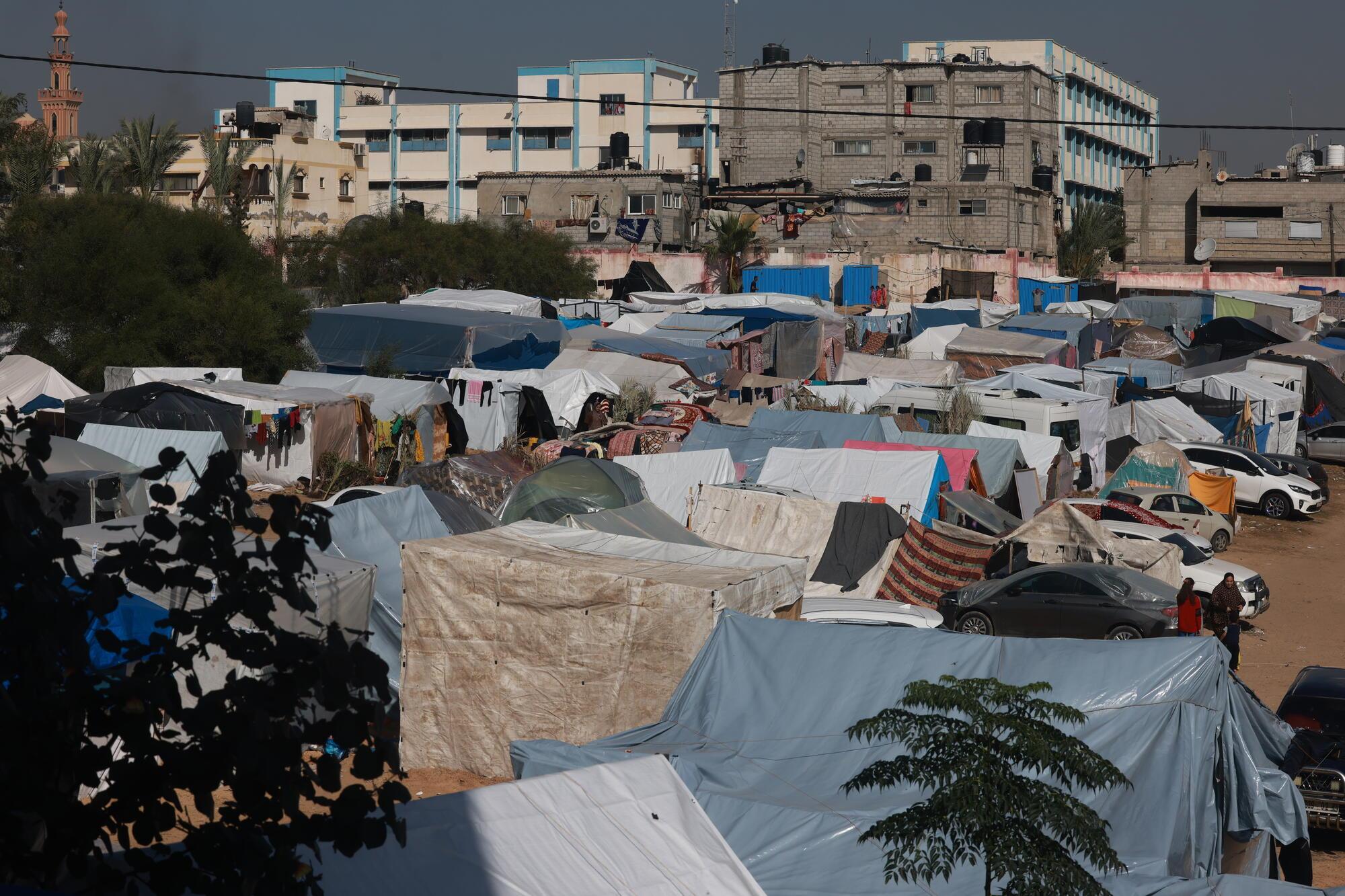
Mapping the care corridor from Nasser Hospital to Gaza City patient flows bottlenecks and triage thresholds
The route linking emergency intake in Khan Younis to definitive care in Gaza City functions less like a road and more like a pulse: it surges, stalls, and reroutes under pressure. Patient streams split and recombine as referrals chase scarce capacity, while the clock on hemorrhage, sepsis, and crush injury keeps unforgiving time. The corridor’s health is measured in small operational victories-minutes shaved off handovers, a single extra ICU bed, a refueled ambulance-yet its frailty is exposed by time-to-definitive-care, ambulance turnover, and coordination gaps when signals and roads fail. Seen on a systems map, the flow narrows at predictable choke points, and every constriction forces clinicians to move the triage needle: who can wait, who must be moved now, and who cannot safely move at all.
- Route volatility: checkpoints and debris force detours, compressing referral windows.
- Fuel scarcity: fewer round trips mean growing queues at transfer nodes.
- Theatre-ICU mismatch: surgeries outpace high-acuity beds, causing post-op gridlock.
- Cold-chain fragility: blood products and antibiotics face spoilage risks en route.
- Data blackouts: delayed alerts stall cross-hospital handovers and family tracing.
| Segment | Typical Delay | Primary Bottleneck | Workaround | Triage Cue |
|---|---|---|---|---|
| Nasser ED → Imaging | 20-45 min | Queue + power dips | POCUS-first | Unstable + FAST+ |
| Imaging → OR | 30-90 min | Limited theatres | Damage control | Hypotension despite fluids |
| OR → Post-op | 40-120 min | ICU bed lag | Step-up PACU | Vent/pressors needed |
| Post-op → Convoy | 1-3 hrs | Ambulance cycle | Batched transfers | Stable on minimal O2 |
| Convoy → Gaza City ICU | 2-6 hrs | Route closures | Waypoint staging | Risk of decompensation en route |
Triage decisions along this spine hinge on two dials-transport time and resource burn. When either spikes, thresholds flex: yellow can slide to red if a patient won’t outlast the convoy, while some red injuries are stabilized locally with treat-to-move tactics (damage control surgery, permissive hypotension, simple airway) rather than definitive care. Conversely, green may become hold-and-watch if transfer would consume a vent, blood unit, or escort needed for a more fragile case. The ethic remains steady even as criteria shift: protect survivability, preserve system capacity, and prevent en-route collapse. In practice this means privileging cases with high marginal gains, prioritizing those with reversible shock over long OR marathons, and standardizing quick cues-shock index, lactate trend, oxygen need-to keep the corridor breathing when the city cannot.
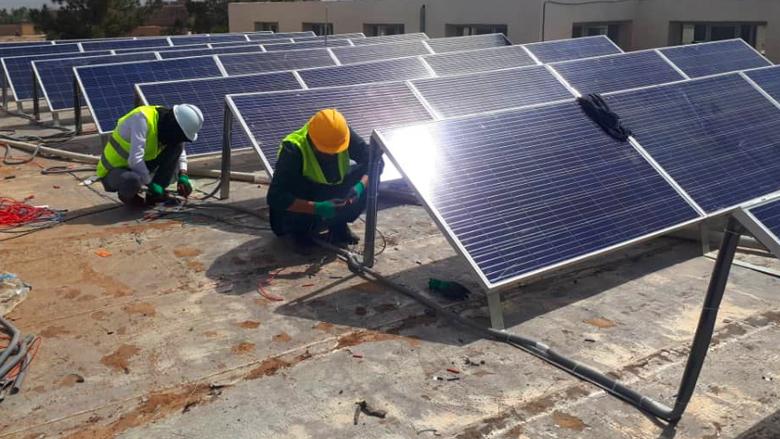
Power water and supplies sustaining surgery and dialysis through fuel rationing solar microgrids and sterile supply chain control
Operating rooms and dialysis bays from Nasser Hospital to clinics in Gaza City are being kept alive by a braided strategy that fuses fuel rationing, rooftop solar microgrids, and ruthless sterile supply control. Generators are throttled to fixed “surgical windows,” while inverters carry lights, ventilators, and monitors through the dead zones between fuel runs. Water teams push brackish feeds through staged filtration, reverse osmosis, and point-of-use chlorination to protect hemodialysis circuits, timing pump bursts to coincide with power availability and reserving ultrapure volumes for the moments when machines and staff align. Sterile processing pivots around the same clock: decontamination lines pre-sort instruments by priority, autoclaves cycle only during generator peaks, and heat-sealed packs are quarantined in shaded, low-humidity rooms where seal integrity is logged against each case cart.
- Fuel triage: colored tags for loads; red (life support), amber (diagnostics), grey (comfort).
- Solar-first: morning surgeries aligned to array peaks; batteries saved for post-op recovery.
- Water assurance: turbidity checks before RO; residual chlorine checks before dialysis runs.
- Sterility gates: peel-pack integrity tests; lot tracing from washer to table; discard on breach.
- Microgrid discipline: no ad-hoc devices on critical circuits; lockout tags on nonessential outlets.
| Unit | Critical load | Primary power | Run window | Fallback |
|---|---|---|---|---|
| Operating Theatre | Lights, vents, suction | Generator + Inverter | 06:00-10:00 | Solar + battery, torch backup |
| Dialysis Ward | Pumps, RO, monitors | Solar + Battery | 10:30-14:30 | Shortened sessions, manual vitals |
| Sterile Processing | Washer, autoclave | Generator | 15:00-18:00 | Chemical sterilants, pack rationing |
| Water Plant | RO, chlorination | Solar | 09:00-12:00 | Stored tanks, point-of-use filters |
What looks like improvisation is, in practice, a layered control system: a daily fuel ledger determines which circuits breathe, solar arrays are partitioned into sub-feeds for theatres, dialysis, and water, and staff rotate to meet the grid’s pulse. Supply carts move under chain-of-custody with lot numbers and expiry clocks, while sterile packs are quarantined if humidity spikes or seals wrinkle. The result is a fragile but reproducible rhythm-brief, high-reliability power for cutting and closing; clean water aligned to dialysis shifts; and instrument sets that arrive verifiably sterile-holding the line between delay and denial of care as the city’s infrastructure repeatedly folds and reforms around the next ration of fuel and sun.
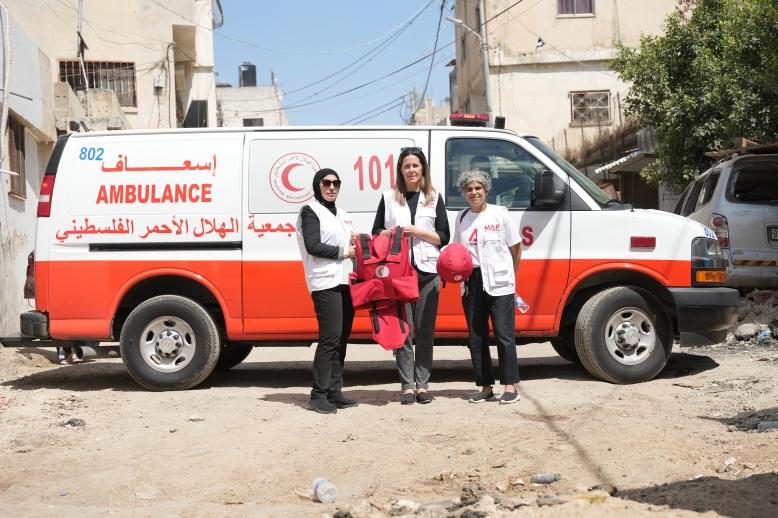
Securing movement amid hostilities GPS tagged ambulances deconfliction hotlines and precleared evacuation windows
Between overstretched wards and cratered streets, moving patients from Nasser Hospital toward Gaza City hinges on a choreography of trust and timing. Ambulances fitted with live location beacons can paint their path in real time, but only if redundant comms survive outages and jamming. Coordination rooms rely on hotline protocols to verify callsigns, confirm grid references, and authorize handovers, while dispatchers juggle air, ground, and municipal alerts. Every corridor is provisional: a geofenced route may be green at dawn and gray an hour later. Success is less about a single technology than the mesh-mirrored maps, battery discipline, and cross-checked timestamps-threaded through an unpredictable day.
- Dual-tracking: GPS plus VHF/mesh as a fallback when networks fail.
- Plain-language callsigns: Short, unique, easily verified under stress.
- Route cards: Laminated grids with time-boxed checkpoints.
- Status pings: One-word codes to reduce airtime and confusion.
- Silent contingencies: Pre-agreed detours activated only if windows close.
Pre-arranged movement windows, negotiated hour by hour, offer a narrow lane through volatility. Dispatchers sequence convoys with time-stamped clearances, color-code segments to avoid choke points, and keep a shadow log that records who knew what, when. When a window narrows, the system pivots: a neutral liaison re-dials the hotline, an escort vehicle updates the grid in 30-second increments, and ambulance crews switch to brevity codes. The aim is modest but vital-shave minutes off uncertainty, keep engines idling instead of idled, and turn an improvised passage into a repeatable practice.
| Tool | Purpose | Fragility |
|---|---|---|
| GPS beacons | Live route trace | Power, signal loss |
| Deconfliction hotline | Verify, clear, record | Congestion, mishearing |
| Timed windows | Predictable passage | Shifts with threats |
| Route cards | Shared reference | Outdated quickly |
| Brevity codes | Faster comms | Requires training |
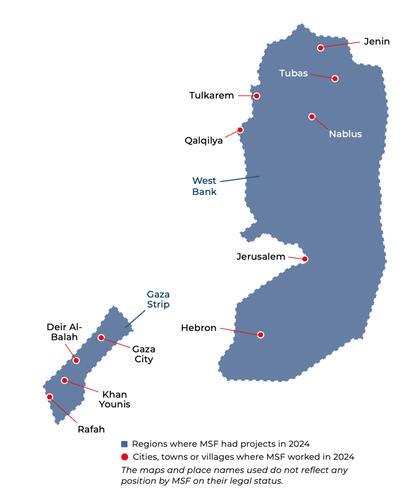
Building resilience beyond the siege mobile clinics telemedicine hubs trauma upskilling and transparent fuel governance
In a landscape where corridors collapse into dust and maps redraw daily, care must move faster than the front line. That means stitching a distributed mesh of service nodes: mobile clinics that bring diagnostics to alleyways, telemedicine hubs that bridge specialists with bedside improvisers, and relentless trauma upskilling so every porter, midwife, and lab tech can stabilize, suture, or decompress when seconds matter. Resilience grows from small, repeatable practices that survive blackouts, reroutes, and curfews, turning improvisation into protocol and scarcity into choreography.
- Clinic-in-a-backpack kits staged at shelter clusters, with rapid swap modules for obstetrics, wound care, and pediatrics.
- Solar mini-fridges paired with mobile teams to protect vaccines and insulin during grid failures.
- VSAT/Starlink triage rooms for live consults, image sharing, and second opinions when roads are sealed.
- Peer-led micro-drills (20 minutes, twice weekly) to hardwire hemorrhage control, airway basics, and mass-casualty flow.
- A roaming “skills steward” auditing procedures, debriefs, and supply use to close the loop between practice and stock.
Power and trust are the oxygen of this system. Without diesel, generators fall silent; without credibility, convoys stall. A disciplined layer of transparent fuel governance-liter-level metering, tamper-evident seals, open ledgers, and community oversight-keeps lights, pumps, and ambulances predictable. Clear, public priorities and lean buffers make the plan legible to patients and staff alike, shrinking rumor and panic while extracting maximum care from every drop.
| Node | Use | Meter/Seal | Public Log | Priority |
|---|---|---|---|---|
| ICU Generator | 24/7 | Inline + QR | Hourly | Red |
| Ambulance A1 | Evac | Tamper Seal | Per trip | Red |
| Vaccine Fridge | Cold chain | Inline | 6-hour | Amber |
| Water Pump S3 | Sanitation | Dipstick | Daily | Amber |
| Clinic Van | Outreach | Fuel Card | Per shift | Green |
Key Takeaways
From the fluorescent corridors of Nasser Hospital to the fractured avenues of Gaza City, the distance on the map is short, but in practice it stretches across shifting risks, thin supplies, and the steady arithmetic of triage. Each day resets the calculus: routes reopen, then close; wards empty, then overflow; what was possible at dawn is improbable by dusk. The challenge is less a single obstacle than a moving horizon.
Numbers help frame the picture-bed counts, fuel stocks, convoy clearances, casualty curves-but they cannot carry the weight of the decisions made at bedside and checkpoint alike. Between metrics and reality lies a narrow space where professionals, patients, and families negotiate an ever-changing present, improvising against constraints they did not choose.
What happens next will be shaped by access, coordination, infrastructure, and decisions taken far beyond the Strip’s borders. None is sufficient on its own; together, they determine whether pressure eases or intensifies. However the lines are drawn tomorrow, two constants remain: patients continue to arrive, and choices remain hard.
In that sense, the road from hospital ward to city street is more than a route-it is a barometer. As long as it narrows, the crisis deepens. When it widens, even modestly, the space for care, safety, and ordinary life begins to return.