
In an era when conflicts migrate from battlefields to browsers, identity has become a new front line. Over recent months, online lists purporting to name Israeli Defense Forces personnel have circulated across social platforms and messaging apps, accompanied by calls to expose personal details and pursue legal action abroad. Advocates frame the effort as accountability in a borderless world; critics see it as digital vigilantism with real-world consequences. Between those poles lie thorny questions: what happens when crowd-sourced accusations collide with due process, when universal jurisdiction meets the limits of verification, and when a click can trail someone across airports, offices, and family homes?
This article examines how these lists emerge, why they resonate, and the legal strategies they seek to activate in foreign courts. It also looks at the risks-misidentification, harassment, and the chilling effect on speech and movement-as platforms and governments struggle to set coherent rules in a global information marketplace. As names move faster than facts, the stakes are high for the individuals on the lists, the activists compiling them, and the institutions asked to adjudicate claims that traverse law, geography, and the volatile politics of the present.
From spreadsheet to subpoena how IDF naming campaigns move from clicks to courts
What begins as a viral thread can morph into a living database, where screenshots and citations are transcribed into structured sheets and cross-referenced with open-source material. Volunteer curators, journalists, and advocacy organizations argue over verification, context, and redaction, while platforms remove posts and mirrors reappear elsewhere. In this churn, entries can travel from a crowd-sourced grid to a lawyer’s inbox, with advocates framing the effort as accountability and critics warning of doxxing and trial by timeline. The result is a liminal space where public claims are sifted, annotated, and sometimes escalated-yet every row in a spreadsheet carries the weight of real-world consequences.
- Sources cited: news reports, public statements, NGO briefings, open-source videos
- Checks discussed: time-place corroboration, metadata scrutiny, translation review, selective redaction
- Frictions faced: takedown notices, moderation sweeps, contested evidence, misinformation spillover
| Pathway | Gatekeeper | Constraint | Possible Result |
|---|---|---|---|
| Spreadsheet dossier | Editors/OSINT reviewers | Accuracy, bias flags | Refined or discarded entries |
| Legal draft | Law clinics/NGOs | Admissibility standards | Affidavits and annexes |
| Court filing | Judges/prosecutors | Jurisdiction, intent | Inquiry or dismissal |
| Aftermath | Defence counsel | Due process rights | Appeals, countersuits |
Once dossiers are assembled, legal teams reframe them as affidavits with exhibits and pursue avenues from universal jurisdiction claims to sanctions petitions and immigration screenings. Courts interrogate chain-of-custody, credibility, and theories such as command responsibility, weighing public evidence against procedural thresholds. Outcomes range from preliminary inquiries to travel risks and media scrutiny; counter-litigation and reputational disputes often follow. In this orbit, digital activism and legal architecture intertwine, revealing how a click-era archive can be reconstituted as a courtroom narrative-one constrained by rules of evidence yet propelled by data that began life online.
Jurisdiction and evidence thresholds shaping cross border prosecutions
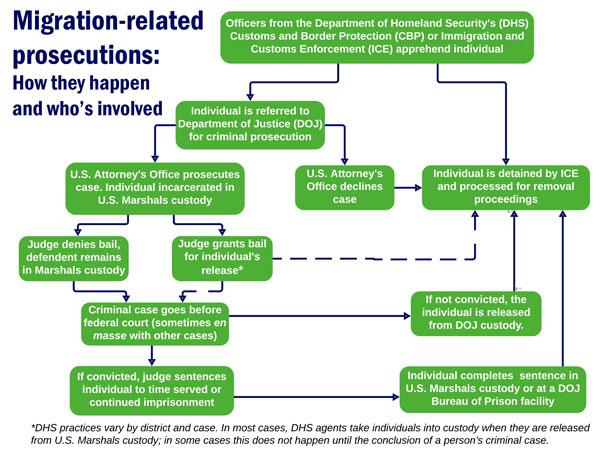
Cross-border prosecutors weigh more than viral spreadsheets: they need a lawful hook to act. Depending on the country, that hook can be territoriality (conduct or effects on their soil), active or passive personality (their nationals as suspects or victims), or universal jurisdiction for grave international crimes. These choices are filtered through dual criminality, limits on immunities (especially for international crimes), and complementarity with proceedings in Israel or at the ICC. Practicalities matter too: MLATs for evidence sharing, Interpol constraints on politically tinged notices, and extradition feasibility. Where several fora are theoretically open, prosecutors assess forum suitability-the tightest factual nexus, victim access, witness security, and the least risk of an abuse-of-process challenge.
Names harvested from social media or “doxing lists” typically function as leads, not proof. To cross the thresholds for warrants or charges, offices demand authenticated evidence tying a person to specific acts and intent, with defensible chain of custody and source corroboration. Open-source material-videos, posts, telemetry-must be geolocated, time-verified, and screened for manipulation. Standards escalate by stage: preliminary inquiries may open on reasonable indication, arrest warrants need probable cause/strong suspicion, and trial requires proof beyond reasonable doubt. Along the way, witness protection, disclosure duties, and exclusionary rules can make or break a case built across borders.
- Identity linkage: verified name-to-person match, roles, and units.
- Nexus: territorial, nationality-based, or universal jurisdiction basis.
- Crime mapping: actus reus and mens rea aligned to domestic offenses.
- Corroboration: multi-source OSINT, records, witnesses, and metadata.
- Feasibility: custody pathway, extradition prospects, and trial venue security.
| Stage | Civil law snapshot | Common law snapshot |
|---|---|---|
| Open investigation | Reasonable indication | Reasonable suspicion |
| Arrest warrant | Strong suspicion; judge-led | Probable cause; magistrate |
| Conviction | Intimate conviction + high certainty | Beyond a reasonable doubt |
Privacy safety and career risks for named personnel and their families
Doxing lists turn people into searchable targets, collapsing the boundary between service and civilian life. Once a name, unit, or photo circulates, the exposure can cascade: scraped by data brokers, echoed in activist forums, and cross-referenced with social profiles that reveal addresses, schools, workplaces, and routines. The risk is not only reputational but domestic-spouses may receive threatening messages, children may be singled out at school, and relatives abroad can face harassment or travel scrutiny. Cross-border legal complaints, even when symbolic, can trigger visa delays, insurance questions, and employer audits, creating a chilling effect on mobility and livelihoods.
- Collateral visibility: family tags, shared calendars, and innocuous posts become locator beacons.
- Jurisdictional spillover: allegations filed in one country can surface in another during hiring or travel checks.
- Search-engine imprinting: a single viral thread can dominate first-page results for years.
- Secondary targeting: friends, landlords, and community leaders may be pressured for information.
| Risk Vector | Impact on Personnel | Impact on Family | Quick Mitigation |
|---|---|---|---|
| Social app leaks | Identity linkage | Home exposure | Lock profiles, alias handles |
| Travel watchlists | Border delays | Trip disruption | Pre-check docs, counsel letter |
| Third-party suits | Employer queries | Income uncertainty | Centralized legal contact |
| Harassment waves | Burnout, stress | School incidents | Incident log, safety plan |
| Data brokers | Persistent trails | Unwanted calls | Opt-outs, PO box |
Career trajectories can hinge on search results as much as on résumés. Recruiters, compliance teams, and international partners often rely on automated screening that flags public allegations-regardless of context. This can delay offers, restrict travel assignments, and complicate licensing or academic placements. Practical resilience is possible: consolidate public statements through an employer or counsel, maintain a neutral professional footprint (industry profiles, publications, certifications) to counterweight hostile content, and keep a dated archive of clarifications and references for background checks. Families benefit from parallel routines: private school groups, alternate contact channels for emergencies, and a simple household protocol for unexpected calls or visits. Over time, a consistent, verifiable record-combined with measured privacy hygiene-reduces volatility without escalating the visibility that fuels the original risk.

Practical safeguards digital hygiene travel risk assessment employer protocols and legal counsel
Digital hygiene is the first line of defense when public lists and coordinated campaigns amplify scrutiny. Treat every online profile as a dossier: assume it will be read out of context and archived. Centralize your footprint, audit what is indexed by search engines, and apply least-necessary disclosure across bios, images, and connections. Use a password manager, rotate unique credentials, and enable strong second factors (prefer app or passkey). Update devices promptly, prune risky app permissions, and review cloud-sharing defaults. Extend the same care to family members whose names, schools, and routines can be inferred via tags and comments. Finally, log and preserve evidence of harassment or doxxing while following employer policy-remediation is easier when you can demonstrate what changed, when, and by whom.
- Reduce surface area: minimize public-facing identifiers (addresses, routine locations), remove geotags, and avoid unit-specific references.
- Harden access: password manager, unique 12+ char passphrases, app-based 2FA or passkeys, screen locks, encrypted backups.
- Communicate wisely: prefer employer-approved channels and settings; review auto-sync of chats, photos, and contacts.
- Continuous monitoring: set alerts for name variations; use platform reporting; document threats; coordinate takedowns via official channels.
- Data broker control: submit vendor opt-outs and remove unnecessary directory listings per legal and HR guidance.
| Exposure vector | Simple mitigation |
|---|---|
| Public bio reveals unit/role | Use neutral role descriptors per policy |
| Location-tagged posts | Post after departure; remove metadata |
| Open friend lists | Hide social graph; limit discoverability |
| Unencrypted cloud backups | Enable encryption; device PIN/biometric |
| Broker/people-search entries | File opt-outs; request redaction |
Before any international movement, pair travel risk assessment with clear employer protocols and early engagement with qualified counsel. Map itinerary risks against current advisories, protest calendars, and legal environments that may heighten exposure to complaints, civil claims, or hostile publicity. Secure a pre-travel legal briefing on local speech, privacy, defamation, and assembly rules; ensure you know how to reach counsel and your employer’s 24/7 security desk. Carry a purpose-of-travel letter, emergency contacts, and insurance details; register with your consulate when appropriate. In any interaction with authorities, comply with lawful instructions, request written documentation of any action taken, and escalate to counsel via the established hotline-do not improvise.
- Pre-brief and train: scenario-based drills for doxxing, service of legal papers, or media approaches; designate a spokesperson.
- Documentation ready: employer letter, counsel contact card, incident report template, and consular info.
- At borders and checkpoints: follow policy on device handling and data access; seek supervisor/legal escalation if uncertain.
- Incident workflow: preserve evidence, notify employer security and legal, avoid public statements, centralize communications.
- Aftercare: post-travel debrief, rotate credentials, update risk profile, and access mental health support as needed.
Closing Remarks
In the end, the lists say as much about our era as they do about their targets. Accountability now travels at the speed of a screenshot, while due process still moves on the timetable of courts. Between those velocities lies a widening gap where activism, investigation, intimidation, and misinformation can look uncomfortably alike.
What happens next will be decided less by any single platform or prosecutor than by a constellation of choices: how institutions verify claims, how media frame them, how judges weigh jurisdiction, and how individuals treat the private lives of people they will never meet. Each choice nudges the boundary between public interest and personal exposure.
For now, names in a spreadsheet stand in for debates societies have not resolved-about war and law, speech and safety, justice and revenge. The borderless internet keeps pressing against border-bound law, and the friction generates heat. Whether it also generates light will depend on whether we can distinguish scrutiny from spectacle, and insist that even our fiercest arguments make room for facts, context, and the dignity of those involved.