
In Israel, the past rarely sits quietly in museums. It breathes through sirens on remembrance days, in family stories told around crowded tables, in faded photographs tucked into wallets. When Hamas gunmen burst across the border on October 7, many Israelis felt that those ghosts stepped suddenly into daylight. The vocabulary that surged across airwaves and dinner conversations-pogrom, annihilation, Nazis-was not chosen for effect. It reached instinctively for the nation’s deepest lexicon of danger.
This analysis explores why, for many Israelis, Hamas appears not merely as a contemporary foe but as an heir to Hitler’s project. The resonance draws on more than trauma. It is fed by Hamas’s record of attacks on civilians, its charter’s history of antisemitic motifs, the public celebration by some of mass violence, and the visceral symbolism of hostages and desecrated homes. Leaders and media have amplified the analogy, turning memory into a political and moral framework for action; families grieving the murdered and missing often find in it a language that feels truer than statistics.
Yet with memory’s power comes risk. Comparing a non-state movement to the Nazi regime carries analytical and ethical stakes: it can clarify intent or collapse nuance, fortify resolve or flatten history. This article traces how and why the comparison took hold, what it reveals about Israeli society under threat, and what it obscures in a region where metaphors can shape wars as much as weapons do.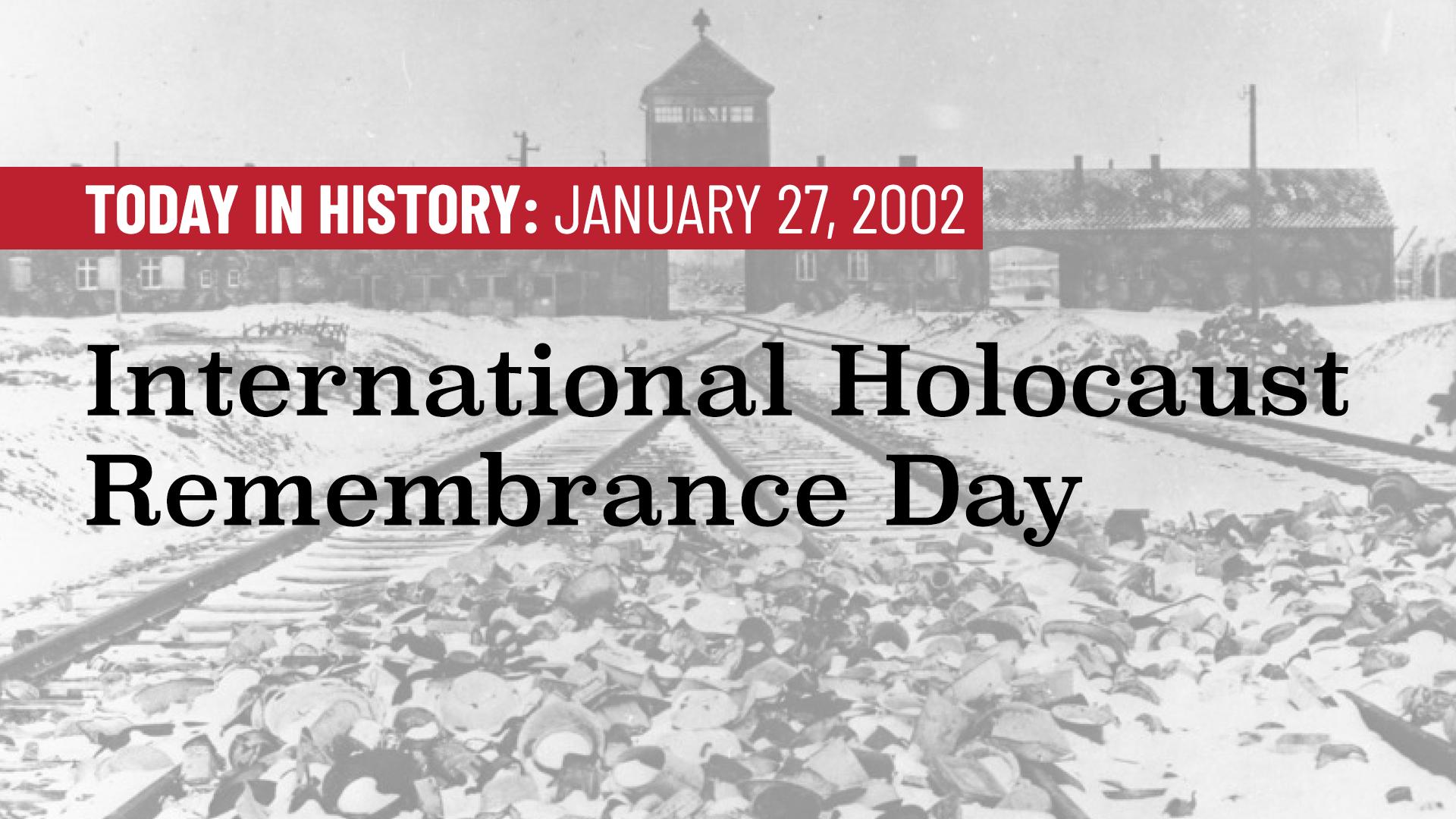
Holocaust memory security threat framing and why many Israelis see Hamas as genocidal
Collective memory in Israel is not only commemorative; it is a living security lens. The Shoah supplies a threat template where signals of intent matter as much as capabilities, so language, symbols, and tactics that appear eliminationist are rapidly mapped onto an existential frame. In that schema, many Israelis read Hamas through cues such as foundational texts and leaders’ statements denying Israel’s permanence, the targeting of civilians in mass-casualty attacks and abductions, and the celebration of such acts as “victories.” The result is a cognitive shortcut: if a foe is perceived to seek civilian annihilation rather than political compromise, the mental file labeled “Nazi-like” is opened, with “Never Again” transforming from memorial vow to operational doctrine.
- Declared aims: References to erasing Israel and repeated refusals to recognize Jewish collective rights are heard as eliminationist intent.
- Target selection: Strikes on noncombatants, indiscriminate rockets, and hostage-taking are read as civilian-focused warfare.
- Rhetorical valorization: Public praise for lethal attacks signals to Israeli audiences a programmatic hostility rather than episodic violence.
- Dehumanizing language: Statements depicting Jews as a cosmic enemy activate Holocaust-era danger scripts.
| Memory cue | Security meaning | Policy impulse |
|---|---|---|
| “Never Again” mantra | Existential stakes | Preemption over restraint |
| Sirens & shelters | Civilian primacy | Rapid escalation to stop fire |
| Hostage images | Duty of rescue | Risk-tolerant operations |
| Global disbelief | Alone-in-the-world echo | Strategic self-reliance |
These frames do not make Israeli society monolithic; there is vigorous debate about proportionality, the dangers of historical analogies, and the distinction between Hamas and Palestinian civilians. Yet the convergence of stated goals, civilian-targeting tactics, and incendiary rhetoric leads many Israelis to conclude that Hamas’s intent is genocidal, even as legal scholars argue over definitions. In practice, this perception tightens red lines, sustains broad support for hostage recovery and defense measures, and makes diplomatic formulas that ignore the memory-security nexus appear naïve-while also intensifying pressure on leaders to pair military action with credible plans that reduce harm to civilians and prevent the very cycle that Holocaust memory warns against.
What Hamas ideology media and tactics communicate to Israeli society
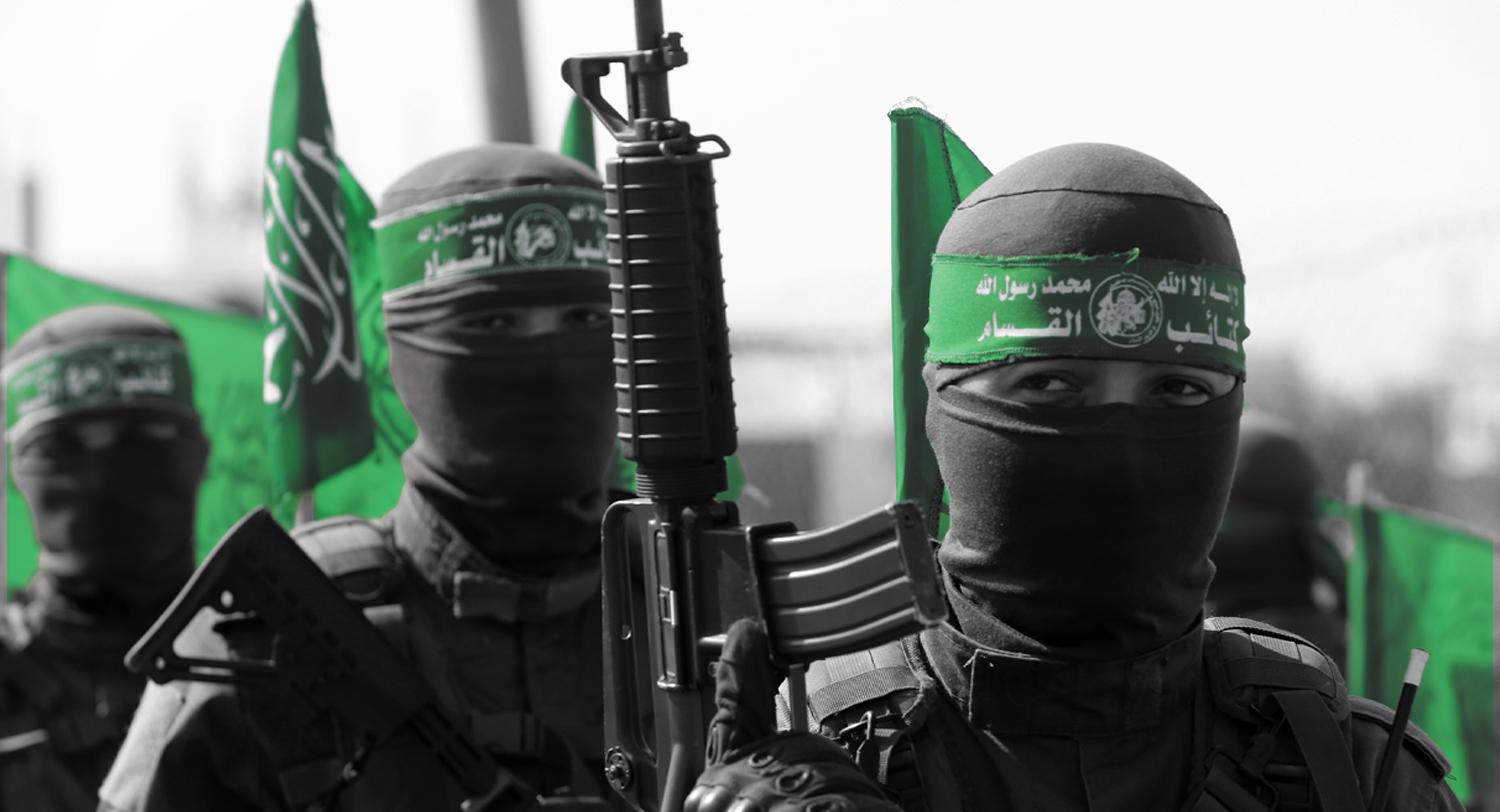
For many Israelis, the ideology, media signatures, and battlefield methods of Hamas form a single, unmistakable message: a politics of elimination masquerading as resistance. The dense mix of theological absolutism, anti-Jewish tropes, and celebratory imagery around violence reads less like a dispute over borders and more like a code for identity erasure. In this decoding, tactics are part of the text-breaches and raids calibrated for shock, rockets that treat cities as targets, and distribution of curated footage to seed dread-together signaling a total-war worldview and a civilians-as-legitimate-targets ethic. The result is a cultural memory trigger: a pattern that echoes the choreography of 20th‑century annihilationism, not mere insurgency.
- Ideology cues: refusal to accept Jewish collective sovereignty; rhetoric that frames Jews as a cosmic enemy rather than a political rival.
- Media cues: anthems, symbols, and visuals that glorify “martyrdom” and erase Israel on maps, implying a future without Jews in the land.
- Tactical cues: attacks that prioritize civilian shock; indiscriminate fire at urban areas; urban militarization that endangers noncombatants.
- Psychological cues: staged triumphalism and hostage propaganda that amplify fear, broadcasting dominance over dialogue.
This is why the predominant Israeli reading converges on an existential threat rather than a solvable conflict. The semiotics translate into social consequences: a fortified consensus around deterrence, skepticism toward diplomatic gestures perceived as optics, and a “never again” reflex that collapses ambiguity into urgency. Israeli society thus internalizes a simple equation-signals of annihilation equal absence of a partner-fueling harder security doctrines, tightened home-front resilience, and a narrative that frames the struggle not as policy negotiation but as civilizational self-defense.
| Perceived Signal | Israeli Reading | Public Effect |
|---|---|---|
| Annihilation rhetoric | Echo of eliminationism | No-trust baseline |
| Targeting civilians | Total-war ethic | Priority on deterrence |
| Triumphal media | Psychological warfare | Rally-around-the-flag |
| Urban launch sites | Disregard for noncombatants | Skepticism on ceasefires |
The limits and dangers of Nazi analogies in policy law and diplomacy
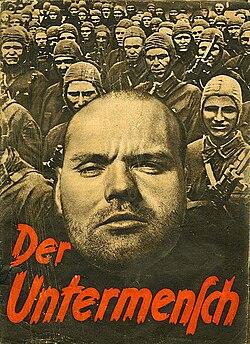
Historical metaphors can clarify moral intuition, but in statecraft they also act like accelerants: once a conflict is narrated through a World War II lens, gradients of culpability collapse and policy drifts from constrained aims to maximalist crusades. In security planning, such framing can expand target sets, normalize exceptional measures, and harden time horizons into “never again” absolutes that complicate exit strategies. In law, Nazi-era comparisons tempt advocates to swap specific evidence of intent for suggestive rhetoric, risking charge inflation, procedural shortcuts, and the dilution of strict thresholds in genocide, incitement, or crimes-against-humanity claims. And in diplomacy, the trope narrows the corridor for de-escalation, as interlocutors become archetypes rather than negotiating parties, making confidence-building, humanitarian access, and third-party mediation politically costly. The challenge is to honor memory without letting it commandeer analysis-using disciplined language that distinguishes between concrete behaviors and symbolic echoes.
- Specify the conduct: name acts, chains of command, and timelines rather than identities or essences.
- Preserve evidentiary rigor: keep high thresholds for intent, proportionality, and distinction; avoid “analogy smuggling.”
- Separate moral judgment from policy design: condemn atrocities while calibrating feasible, time-bounded objectives.
- Use de-escalatory vocabulary: prefer verifiable commitments (“ceasefire terms,” “hostage sequencing”) over cosmic narratives.
- Anticipate escalation ladders: war-game how analogical rhetoric changes rules of engagement and regional spillover.
| Arena | Typical Pitfall | Better Practice |
|---|---|---|
| Security Policy | Maximalist goals framed as moral duty | Define narrow aims, measurable off-ramps |
| Criminal Law | Intent inferred from analogy, not evidence | Document chains of command, specific orders |
| International Advocacy | Charge inflation eroding credibility | Match claim to statute and proof standard |
| Public Diplomacy | Dehumanizing frames foreclosing talks | Person-centered language, modular agreements |
None of this forbids drawing historical lessons; it argues for analytical hygiene. By privileging verifiable behaviors over archetypes, negotiators and lawmakers can protect humanitarian imperatives, sustain coalition support, and keep legal pathways usable-ensuring that moral clarity sharpens judgment rather than blinding it.
Practical steps for leaders educators and journalists to reduce dehumanization protect civilians and improve accountability
Words can widen wars, or narrow them. Replace labels that erase people with language that centers human beings: say “Israeli civilians,” “Palestinian civilians,” “families,” and “survivors,” and avoid metaphors that liken groups to pests or diseases. For public officials and school leaders, institutionalize harm-reduction: codify civilian-protection checklists before briefings, require a duty-of-care statement alongside any security announcement, and create standing channels for humanitarian coordination. In classrooms, foreground media literacy and history side-by-side-teach how atrocity narratives emerge, how propaganda exploits grief, and how to audit sources. Build muscle memory for accountability: preserve evidence (photos, logs, timestamps), set correction windows, and invite cross-border experts to review claims in real time.
- Leaders: Publish plain-language rules of engagement that prioritize civilian safety; pair every operation update with humanitarian access updates.
- Educators: Use dual-narrative lesson plans, community dialogues, and trauma-aware pedagogy that humanizes all affected children.
- Journalists: Apply a conflict-stylebook: ban dehumanizing terms, require two-source verification for battlefield claims, and foreground civilian impact boxes.
- Platforms & publishers: Down-rank incitement, label graphic content, and archive removals for independent audit rather than erasure.
| Role | Key step | Outcome |
|---|---|---|
| Leaders | Humanitarian corridors by default | Fewer civilian casualties |
| Educators | Bias and source-audit modules | Resilient media literacy |
| Journalists | Corrections log + timestamps | Trust through transparency |
Make accountability visible. Newsrooms can publish verification notes, casualty-methodology explainers, and time-stamped updates; governments can release civilian-harm assessments and open data on claims; schools can share how they vet materials. Adopt simple dashboards-“time to correction,” “percent of coverage centered on civilians,” “dehumanizing-language alerts”-and appoint an ombudsperson to track them. Use survivor consent protocols for imagery, avoid looping graphic content, and pair every security-focused segment with service information (evacuation routes, aid access). Finally, create joint briefings with independent monitors and local voices from all affected communities; when those most harmed are heard first, precision increases, rumors shrink, and the public square becomes harder for dehumanization to occupy.
Concluding Remarks
In the end, the analogy tells us as much about the present as it does about the past. For many Israelis, the Holocaust is not a chapter in a textbook but a living inheritance-carried in family stories, civic rituals, and a sense of existential precarity-through which the violence of today is interpreted. In that frame, Hamas is not just an enemy; it is read as a reprise of a threat that once promised annihilation.
But historical metaphors are powerful tools that also have costs. They can offer moral clarity and mobilize endurance, yet they can also flatten differences, blur responsibility, and narrow the political imagination. For Palestinians, the comparison may feel like an erasure of their own narrative; for outsiders, it can short-circuit debate by turning policy into morality plays. In the fog of grief and fear, the line between warning and absolutism is thin.
If the past is a lens, it is also a mirror. The language chosen now will shape alliances, justify strategies, and define the bounds of empathy. Precision does not diminish pain; it protects judgment. Perhaps that is the sober lesson: history is a guide, not a weapon, and the words used to name this moment will either help build a future after the guns fall silent, or make it harder to imagine one at all. What we choose to call this war may not end it, but it will help decide what can be imagined when it is over.