
With Yahya Sinwar gone, the vacuum at the heart of Hamas is less a single empty chair than a maze of corridors. The movement’s leadership has long been dispersed-tunnels under Gaza, hotel suites in Doha, safe houses across the region-and wartime attrition has turned that dispersion into both resilience and rivalry. The question is not only who steps forward, but which center of gravity prevails.
Answering that requires tracing power, not just personalities: the Qassam Brigades’ surviving command structure, the political bureau abroad, the shura mechanisms that bind them, and the external patrons who arm, fund, or mediate. Names will surface, but so will constraints-the toll of targeted killings, the devastation inside Gaza, pressure from Iran, Hezbollah, and Arab intermediaries, and the ever-present friction between the “inside” and “outside” leaderships.
This analysis maps the succession pathways, profiles plausible contenders, and weighs how the next leader-whoever emerges-could reshape Hamas’s strategy, from the battlefield to the bargaining table.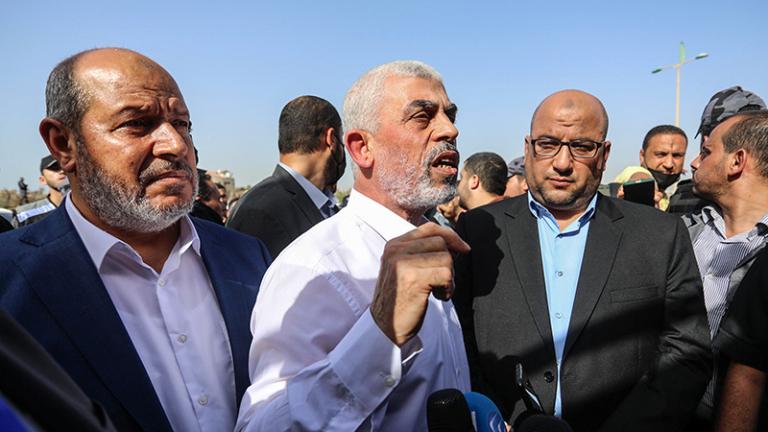
Inside Gaza and abroad the evolving chain of command
With Sinwar removed, authority within Gaza is likely to tilt toward a more distributed, survival-first architecture: decisions filtering through a layered shura process, executed by sector commanders, and buffered by logistics chiefs who control tunnels, munitions, and couriers. In practice that means fewer charismatic directives and more command-by-committee inside Khan Younis, Gaza City, and Rafah, where cell leaders calibrate actions to resource scarcity, civilian pressure, and negotiation signals from abroad. Messaging is expected to tighten, with the internal media apparatus standardizing lines to reduce operational signatures, while coordination with other militant factions becomes transactional-focused on immediate battlefield needs rather than grand strategy.
- Operational channels: couriers and cut-outs over digital conduits
- Decision nodes: sector-level joint rooms balancing risk and supply
- Resource levers: tunnels, cash pipelines, and improvised manufacturing
- Political signaling: tightly scripted statements to shape ceasefire and prisoner exchanges
- Deconfliction: ad hoc understandings with allied factions to avoid fratricide
| Node | Key Levers | Near-Term Priority |
|---|---|---|
| Sector commanders (Gaza) | Cells, terrain, attrition tempo | Survivability over spectacle |
| Logistics chiefs (Gaza) | Tunnels, IED/RPG pipelines | Replenish and disperse |
| Political liaisons (Gaza) | Civilian relief, messaging | Signal control, leverage hostages |
| Political bureau (abroad) | Negotiations, finance, diplomacy | Continuity and external buy-in |
| Diaspora veterans | Networks, outreach, donors | Unity formula, succession bridge |
Outside Gaza, the political bureau and veteran diaspora figures will seek to project continuity without centrality-a caretaker cadence that preserves bargaining power while acknowledging that real-time command has devolved to the field. Expect a portfolio split: external leaders handle talks, funding, and narrative, while Gaza-based coordinators retain operational vetoes. Three scenarios loom: a short-lived interim committee that ratifies field decisions; a diaspora-led consolidation that risks drift if Gaza commanders balk; or a dual-key model in which external negotiators set political frames and internal nodes gate kinetic moves. The balance will hinge on money flows, mediation pressure from Qatar and Egypt, and whether internal cohesion survives the tug-of-war between operational autonomy and the appearance of a single, disciplined chain of command.
Profiles networks and vulnerabilities of the leading contenders
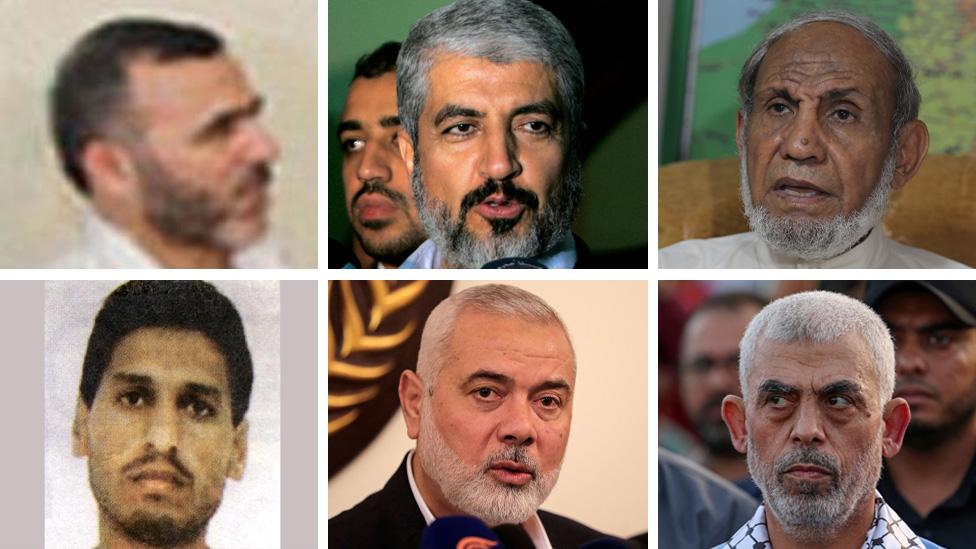
Power is likely to coagulate around a few durable hubs rather than a single heir. The external political bureau, nurtured in Doha and Istanbul, offers diplomatic reach, donor access, and media fluency; the Gaza-based cadre retains street-level legitimacy, clan alliances, and the muscle of wartime governance; the Lebanon ring provides regional leverage and a conduit to allied factions. Each prospective leader carries a distinct blend of charisma, patronage, and institutional memory-assets that can stabilize succession or deepen factional rifts depending on how the movement’s shura balances portfolios, geography, and ideology.
- Khaled Meshaal – veteran figure with deep ties to Gulf and Turkish circuits, skilled at consensus-building and international messaging.
- Mousa Abu Marzouk – architect of diplomatic channels; valued for negotiations, fundraising fluency, and organizational continuity.
- Zaher Jabarin – finance-logistics strategist; bridges West Bank networks, detainee portfolios, and external revenue architecture.
- Rouhi Mushtaha – Gaza-based operator; proximate to local governance, security liaisons, and clan-mediated legitimacy.
- Osama Hamdan – Beirut anchor; interfaces with regional allies and narrative framing amid shifting battlefield optics.
| Contender | Core Base | Network Anchors | Key Risk |
|---|---|---|---|
| Meshaal | Doha | Gulf, Turkey | Distance from Gaza realities |
| Abu Marzouk | Istanbul | Diplomatic, donors | Perception of caution |
| Jabarin | Exile network | Finance, detainees | Sanctions exposure |
| Mushtaha | Gaza | Clans, governance | Operational strain |
| Hamdan | Beirut | Regional allies | Overlap with other factions |
Their vulnerabilities are less about personality and more about structural fault lines: the seam between diaspora strategy and wartime ground truth; the tug-of-war among patrons with diverging priorities; the scarcity of funds and safe movement as sanctions and closures bite; and a generational divide between older tacticians and younger organizers radicalized by siege and displacement. The eventual frontrunner will need to stitch together disparate theaters-Gaza, exile hubs, and West Bank cells-without triggering zero-sum rivalries or alienating civilian constituencies exhausted by crisis.
- Fragmentation risk: competing mandates across shura tiers, media spokes, and local commanders.
- Patron pressure: balancing Iranian, Qatari, and Turkish expectations with on-the-ground constraints.
- Resource squeeze: tighter sanctions on finance pipelines; reputational costs with donors.
- Legitimacy gap: diaspora credibility vs. Gaza’s demand for responsive governance.
- Messaging hazards: narrative drift amid fog-of-war and rapidly shifting ceasefire calculus.
How Qatar Iran Egypt and Turkey could shape the succession
Regional patrons and neighbors will not pick the next face of the movement, but they will set the lighting, sound, and timing of the stage. Qatar wields leverage through mediation channels and financial valves tied to reconstruction and salaries; it prizes a leadership that can sit in rooms and keep doors open. Iran prefers cadres aligned with its deterrence doctrine and regional “axis,” rewarding figures who keep the military pressure credible. Egypt is the gatekeeper of Gaza’s lifeline and de-escalation architecture, nudging toward a leader who respects red lines along Sinai and Rafah. Turkey amplifies political narratives and diaspora reach, favoring a political bureau that speaks fluent international advocacy even under sanction.
- Qatar: Mediation access, budgetary oxygen, international insulation.
- Iran: Material backing for armed capability, ideological alignment, regional deterrence.
- Egypt: Border control, intelligence channels, ceasefire mechanics.
- Turkey: Diplomatic cover, media platforms, convening power with Islamist actors.
These pull factors narrow the shortlist to three archetypes: a diaspora political technocrat who can negotiate and fundraise; a Gaza-grounded commander who can impose internal discipline; or a hybrid compromise that splits portfolios between war and diplomacy. The more the warfront dominates, the more Tehran’s equities rise; the more talks and aid flows matter, the more Doha and Cairo gain sway; the louder the international messaging, the more Ankara’s voice counts. The outcome is likely a coalition model, tested first by prisoner deals and border arrangements, then by whether cash and calm can coexist.
| Path | External Push | Key Risk | Signal |
|---|---|---|---|
| Diaspora Politico | Qatar, Turkey | Weak grip in Gaza | Talks first |
| Military Hardliner | Iran | Escalation spiral | Deterrence first |
| Dual Track | Egypt + Qatar | Factional friction | Pragmatic balance |
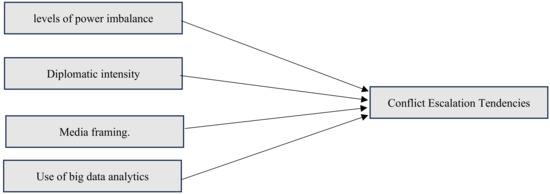
Actionable steps for diplomats and security planners to reduce escalation risks
Stability hinges on predictable channels, calibrated incentives, and disciplined messaging. Build discreet, verifiable communication lines to potential successors and their external patrons, using mutually trusted intermediaries to keep dialogue insulated from domestic grandstanding. Pair pressure with pathways: tie any leverage to clear, reversible milestones that unlock humanitarian access, prisoner exchanges, or political standing, and document these steps in simple, shareable terms to avoid misread signals. Coordinate with regional conveners to synchronize timelines-ceasefire windows, border policies, and energy/aid deliveries-so no single actor bears the political cost alone. Narrative management is a deterrence tool: commit all statements to a “no surprises” regime, pre-briefing key stakeholders on red lines and off-ramps to reduce rumor-driven escalations.
- Backchannels: Quiet, redundant lines with deniability and clear authentication.
- Sequenced incentives: Small, time-bound gains tied to concrete de-escalatory moves.
- Joint messaging cells: Align statements across capitals within a 2-4 hour window.
- Humanitarian corridors: Pre-approved routes with GPS-locked time slots and dispute hotlines.
- Verification swaps: Third-party monitored steps (e.g., detainee lists for aid convoys).
Security planners need a repeatable “escalation thermostat” rooted in shared data and disciplined response ladders. Stand up real-time deconfliction nodes that fuse ISR, humanitarian movement schedules, and public diplomacy cues, and rehearse incident triage matrices before a crisis, not after. Codify proportional response templates that leave room for face-saving pauses (e.g., 12-24 hour cooling measures) alongside pre-agreed investigative mechanisms. Bake civilian harm mitigation into targeting and timing, and deploy rumor-quashing micro-briefs in multiple languages within minutes. Finally, measure what matters: track cross-border fire rates, hate-speech spikes, and aid throughput as early-warning dials rather than after-action statistics.
| Signal | Likely Intent | De-escalatory Reply |
|---|---|---|
| Short, localized fire | Probe or domestic posturing | Quiet hotline protest + monitored stand-down |
| Media leak of “red line” | Deterrence messaging | Private clarification; avoid public escalation |
| Checkpoint clampdowns | Risk control after intel alert | Time-bound easing tied to third-party checks |
| Drone overflight | Surveillance, not strike intent | Notify via deconfliction node; adjust routes |
Key Takeaways
If Sinwar’s chapter is closing, the story does not end so much as change narrators. Whether the mantle falls to a battle-hardened commander in Gaza, a political operator abroad, or a compromise figure straddling both worlds, the movement’s center of gravity will be shaped less by personality than by structure: the shura’s arithmetic, the Qassam Brigades’ leverage, the demands of governance under siege, and the preferences of external patrons.
Names matter, but incentives matter more. The successor will inherit a landscape defined by scarcity and surveillance, fractured institutions, and competing audiences-from cadres and constituents to mediators and adversaries. Watch for how power is distributed, not merely to whom; for shifts in revenue streams and messaging, not just rhetoric; for the quiet bargains that outlast the headlines.
In a group built to survive decapitation, succession is less coronation than calibration. The answer to “who’s next” is ultimately a configuration, not a single figure-and it will be that configuration, not the biography attached to it, that determines what comes next.