
The corridors of diplomacy are busy again. Israeli Prime Minister Benjamin Netanyahu is set to hold talks as Hamas officials declare that the latest negotiations over Gaza have “failed,” a stark juxtaposition that encapsulates the fragile state of efforts to halt the conflict and broker a hostage-prisoner deal. The two narratives-one of renewed consultation, the other of deadlock-arrive after months of internationally mediated attempts to bridge a gap that has resisted both pressure and persuasion.
At stake is more than a ceasefire. Families of hostages, civilians in Gaza, regional mediators, and political actors in Israel and beyond are bound to the outcome of talks that have repeatedly neared breakthrough only to recoil. Netanyahu faces a complex blend of military considerations and domestic pressures, while Hamas signals that its core demands remain unmet. As the negotiation table is reset yet again, the path forward appears as narrow as ever-yet, for those with the most to lose, every new round still carries the possibility of a turning point.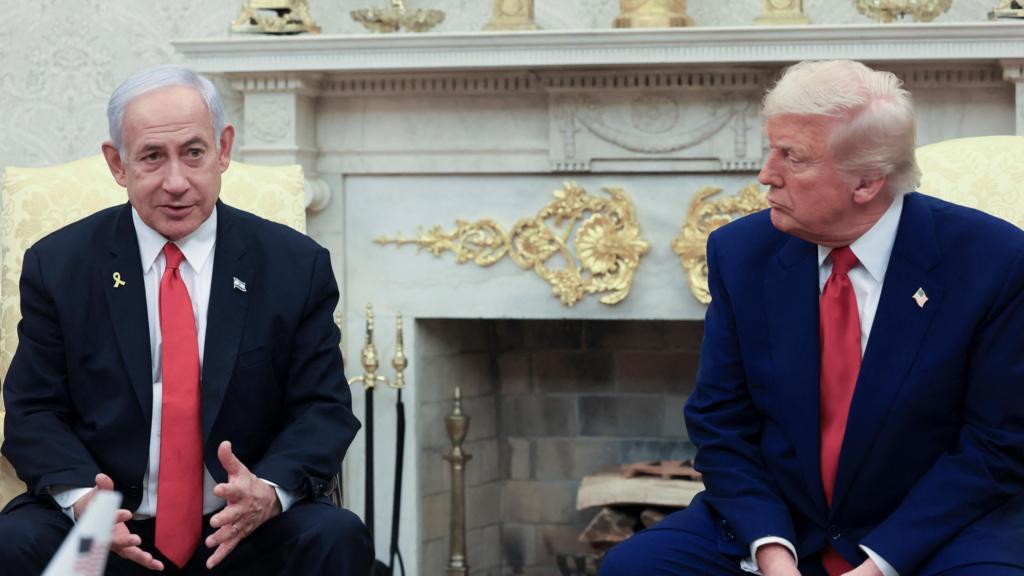
Netanyahu convenes talks amid claims of failed mediation and shifting regional leverage
With senior advisers and security chiefs back at the table, the prime minister seeks a single, coherent negotiating line after claims of collapsed mediation reshaped expectations across the region. Power is being measured less by declarations and more by practical leverage: hostage files, aid corridors, and cross-border guarantees now act as transactional pressure points. Between coalition calculus and battlefield realities, the agenda narrows to hard trade-offs-sequencing any pause in fighting, structuring phased releases, and locking in verifiable steps that can withstand domestic scrutiny.
Diplomats frame the moment as a test of credible enforcement versus symbolic optics, where each side weighs concessions against rapidly shifting incentives. A viable path would require third‑party assurances, monitorable milestones, and language precise enough to deter backsliding yet flexible enough to survive political turbulence. Absent that, the process risks stasis, with humanitarian metrics-aid throughput, evacuation windows, medical access-becoming the only visible yardsticks of movement.
- Sequencing: Phased pauses aligned with incremental releases
- Verification: Independent monitoring and rapid dispute channels
- Access: Clear rules for aid flows and inspection regimes
- Guarantees: Regional brokers underwriting compliance
- Timelines: Short, testable steps that can be extended if met
| Stakeholder | Leverage | Constraint |
|---|---|---|
| Israel | Military pressure | Coalition fissures |
| Hamas | Hostage file | Isolation, attrition |
| Egypt | Border control | Spillover risk |
| Qatar | Mediation channels | External scrutiny |
| United States | Security backing | Domestic politics |
| UN Agencies | Aid logistics | Limited enforcement |

Reading Hamas messaging and mediator constraints to understand where the process broke down
Reading between the lines of recent statements, the rhetoric itself sketches the fault lines. When spokespeople emphasize “comprehensive” arrangements, they are signaling a demand for sequencing that links any pause to broader political guarantees; when they stress “humanitarian” steps, they are carving out space for narrow, time-bound gestures. Mediators, meanwhile, must translate these cues into draft texts that balance irreversibility (what changes on the ground and cannot be undone) with reversibility (what parties can roll back if trust collapses). In this environment, even a single adjective can tip leverage: “permanent” versus “sustainable,” “guarantees” versus “assurances,” “phased” versus “immediate.”
- Hostage-prisoner symmetry: public talk of “all-for-all” raises ceilings that negotiators struggle to meet in staged swaps.
- Ceasefire vocabulary: calls for “permanent” quiet collide with counteroffers of “renewable” pauses, reflecting divergent risk horizons.
- Verification demands: insistence on third-party monitoring suggests low baseline trust and a need for on-the-ground mechanisms.
- Cross-border guarantees: references to regional actors hint at security layers that mediators must thread into any text.
| Signal | Likely Meaning | Constraint Exposed |
|---|---|---|
| “Comprehensive framework” | Link ceasefire to political track | Scope creep vs. quick wins |
| “Phased implementation” | Staged swaps, rolling pauses | Sequencing disputes |
| “International guarantees” | External enforcement | Who enforces, and how |
| “Humanitarian corridors” | Limited operational relief | Access and deconfliction |
The breakdown often occurs at the junction where messaging-driven red lines meet the mediators’ bandwidth and mandate. Drafts stall on the order of moves (who pauses what, when), on ratio and category in exchanges (civilian vs. military detainees), and on verification clocks (who certifies compliance within hours, not days). Mediators carry their own constraints-limited leverage, competing sponsor interests, and the need to keep both public optics and back-channel credibility intact-so they lean on ambiguous verbs that keep doors ajar. But ambiguity has a half-life: without a synchronized timeline, neutral ground rules for aid and monitoring, and a pre-agreed fallback if one side alleges breach, language that once bridged differences hardens into proof of bad faith, and the process seizes.
Concrete steps to revive diplomacy phased ceasefire benchmarks third party guarantees and sequenced prisoner exchanges
With formal channels faltering, the most workable path is a layered calm that builds trust through verifiable results. Each stage should be tied to measurable targets, monitored by neutral actors, and reinforced by clear consequences for slippage. That means specifying time-bound pauses, aid-throughput benchmarks, and independent verification-all backed by coordinated guarantees from states with leverage. A practical frame: start small, test compliance, then scale. Quiet hours expand to localized pauses, then to broader cessation-each unlocked only when agreed metrics are met and certified by third-party monitors.
- Calibrated pauses: Begin with 48-72 hours of silence mapped to priority zones and hospitals.
- Benchmarks that matter: Aid trucks/day, fuel liters for generators, and protected evacuation windows.
- Verification: UN-led incident logging, satellite-confirmed deconfliction routes, and hotline acknowledgments.
- Guarantees: US-Egypt-Qatar coordination cell, EU logistics support, and UN on-the-ground oversight.
- Snapback clauses: Automatic rollback to prior phase for verified breaches; no open-ended ambiguity.
| Phase | Trigger | Guarantee | Deliverable |
|---|---|---|---|
| 0: Quiet Hours | Hotline activation | Joint notification | Ambulance corridors |
| 1: Local Pauses | Aid 200+ trucks/day | UN verification | Fuel to hospitals |
| 2: Area Cease | 72 hrs incident-free | Written assurances | Wider relief ops |
A synchronized exchange track can move in parallel, sequenced to the same verifiable logic. Prioritize the most vulnerable and link each batch to concrete humanitarian gains, not vague promises. Use tiered releases, mutual transparency, and time-stamped swaps supervised by neutral guarantors. Every step should be matched-people for people, movement for movement-so that neither side feels exposed. Public messaging stays minimal; documentation, medical checks, and proof-of-life remain standardized and confidential.
- Batch A: Women, children, elderly/sick-paired with detainees of similar profiles.
- Batch B: Civilian adults-matched with agreed detainee lists and family notifications.
- Batch C: Complex cases-sequenced with remains repatriation and location disclosures.
- Safeguards: ICRC presence, biometric confirmations, and synchronized transport windows.
- Assurances: Written custodial guarantees, media blackout until completion, and dispute-mediation cell.
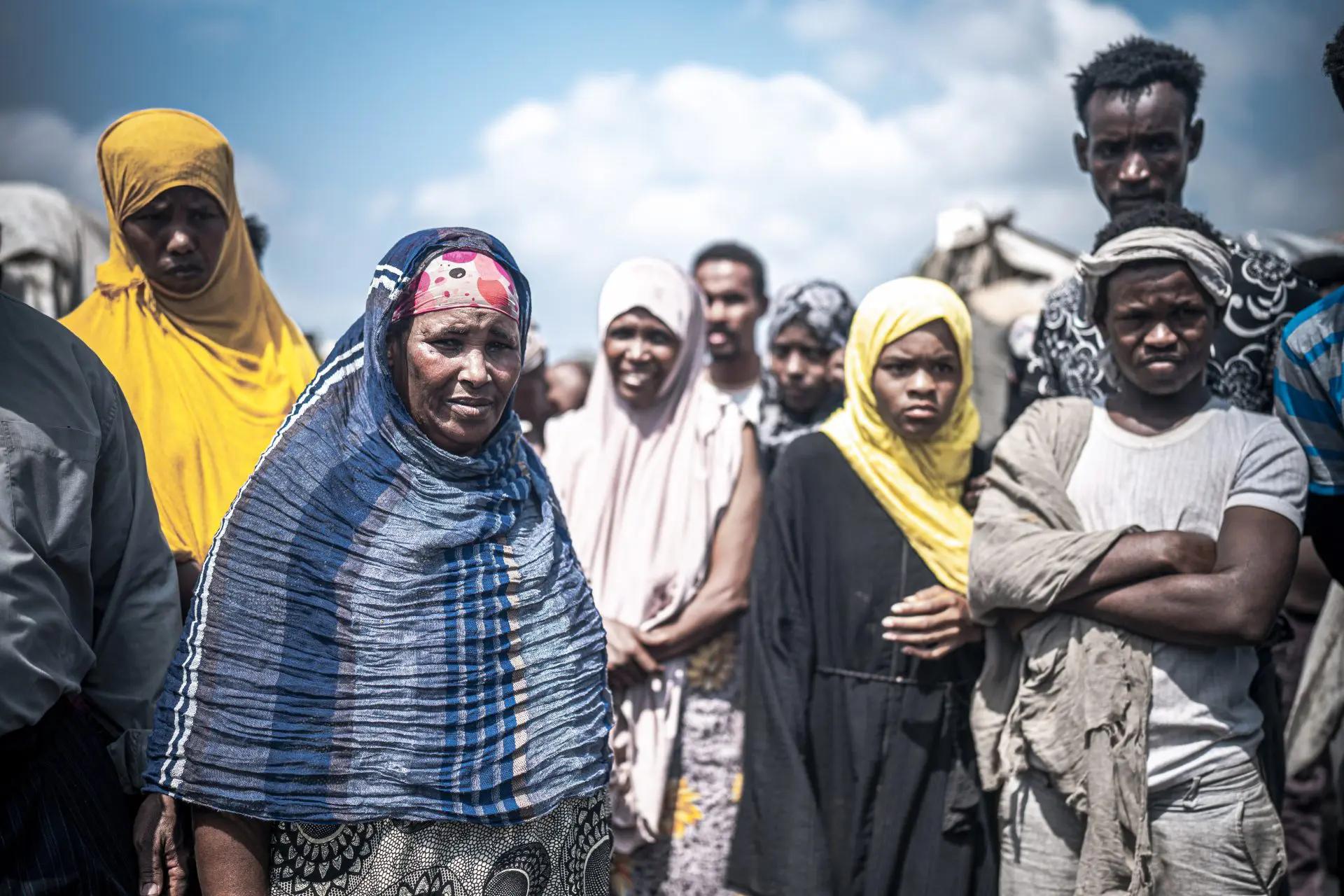
Limiting civilian harm expand aid corridors enable independent monitoring and create joint deconfliction cells with clear accountability
With negotiations faltering, the immediate priority is operational safeguards that keep civilians out of the line of fire while aid keeps moving. That means pre-announced safe-passage windows mapped to real-time movement, layered checkpoints staffed by neutral actors, and a continuously updated no-strike registry tied to geofenced health, water, and shelter sites. Independent verification-from third-party observers to open-source geospatial feeds-should anchor every claim about access and incidents, creating a shared factual baseline that can survive political swings. Clear protocols for incident reporting, rapid remediation, and public disclosure can prevent the information vacuum that fuels mistrust and retaliation.
A practical architecture hinges on joint cells where operational focal points from all sides sit with neutral mediators, sharing deconfliction maps, hotline logs, and convoy manifests in near-real time. Build accountability into the workflow: documented approvals, auditable timelines, and consequence pathways for breaches. Equip corridors with multilingual hotlines, community liaisons, and digital tracking (QR-tagged cargo, anonymized movement data) to spot bottlenecks early. The objective is simple: fewer civilian casualties, more predictable aid flows, and a transparent ledger of decisions that can be reviewed-daily if needed-by monitors trusted by the public.
- Safe-passage windows: Publish daily, align with evacuation routes, and synchronize with medical transfer schedules.
- Corridor integrity: Neutral escorts, layered verification, and redundant routes to prevent single-point failures.
- Monitor access: UN/ICRC/NGO presence at chokepoints, with protected data channels and on-site debriefs.
- Joint deconfliction: 24/7 cell, shared maps, hotline escalation in minutes-not hours.
- Accountability ladder: Incident logs, independent review within 24-72 hours, published corrective actions.
- Community feedback: Local liaisons, multilingual reporting tools, and rapid fixes for flagged risks.
| Action | Lead | Metric | 48h Goal |
|---|---|---|---|
| Publish safe-passage windows | Joint Cell | On-time notices | 2 daily cycles |
| Activate neutral escorts | UN/ICRC | Convoys secured | 90% coverage |
| Live no-strike updates | Military focal points | Map refresh rate | Every 30 min |
| Incident review | Independent panel | Reports closed | < 72 hours |
Wrapping Up
As statements harden and schedules fill, the distance between battlefield and negotiating table remains perilously small. Hamas officials frame the latest round as a dead end; Israeli leaders prepare yet another round of consultations. Between those lines lies a public bracing for the next headline, and a region where every hour of uncertainty deepens the humanitarian toll.
Diplomacy seldom moves in straight lines. Openings can appear where they didn’t exist a day before; momentum can evaporate in a sentence. Whether the coming talks reset the pace or simply recycle familiar positions, the stakes are unchanged: lives, legitimacy, and a fragile balance that resists simple solutions.
For now, the path forward is a narrow corridor-partly lit by pressure, partly blocked by mistrust-waiting for someone to widen it into a way out.