
The phrase “Gaza genocide” has moved from hashtags and street chants into court filings, UN briefings, and front-page headlines, carrying the weight of law and the heat of grief. For some, it is a precise description of a pattern of violence; for others, a grave accusation that collapses context and intent. Between these positions lie shattered homes and crowded shelters, legal definitions and satellite images, testimonies from hospitals and evacuation routes, security briefings and ceasefire pleas. Words compete with sirens; evidence competes with doubt.
This article does not attempt to settle the argument by declaration. Instead, it asks what the word genocide means in law and history; how intent is inferred and civilian harm is counted; which facts are uncontested and which remain disputed; and how different actors-survivors, aid workers, governments, scholars, and courts-frame the same events. It follows the trail of claims and counterclaims, from battlefield to courtroom to newsroom, and considers the responsibilities that attach to all parties under international humanitarian law.
To read on is to step into a thicket of definitions and data, of narratives that are mutually exclusive yet equally urgent. The aim is clarity rather than verdict: to map the terrain, name the stakes, and hold space for the human lives at its center.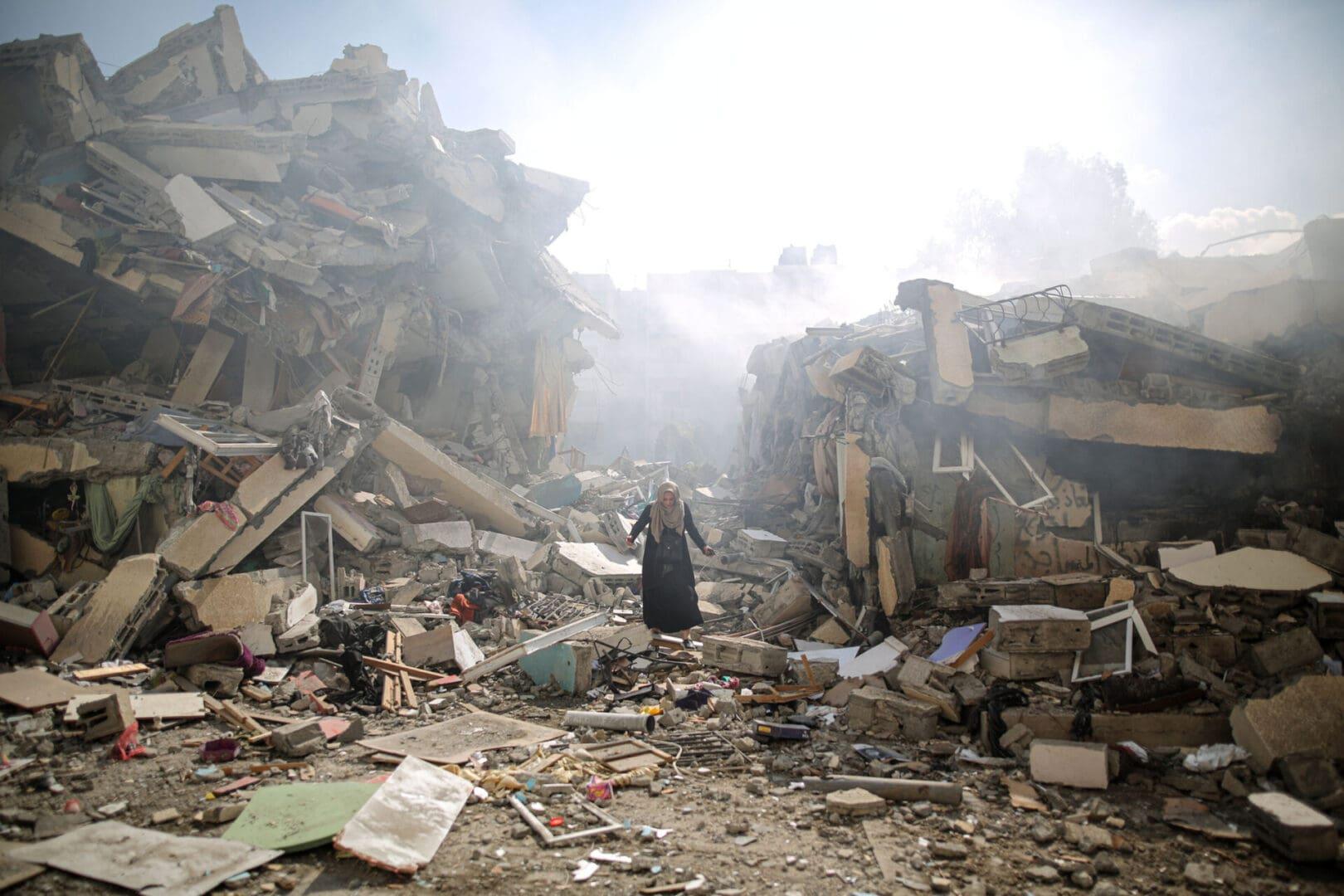
Defining Genocide and the Criteria Applied to the Gaza Context
Headline
“Gaza Is Not a Footnote”: The War on Civilians and the Struggle for Palestinian Freedom
Subheadline
As Gaza endures mass displacement, hunger, and relentless bombardment, Palestinian voices call for an end to impunity, a permanent ceasefire, and a future rooted in liberation and dignity.
Introduction
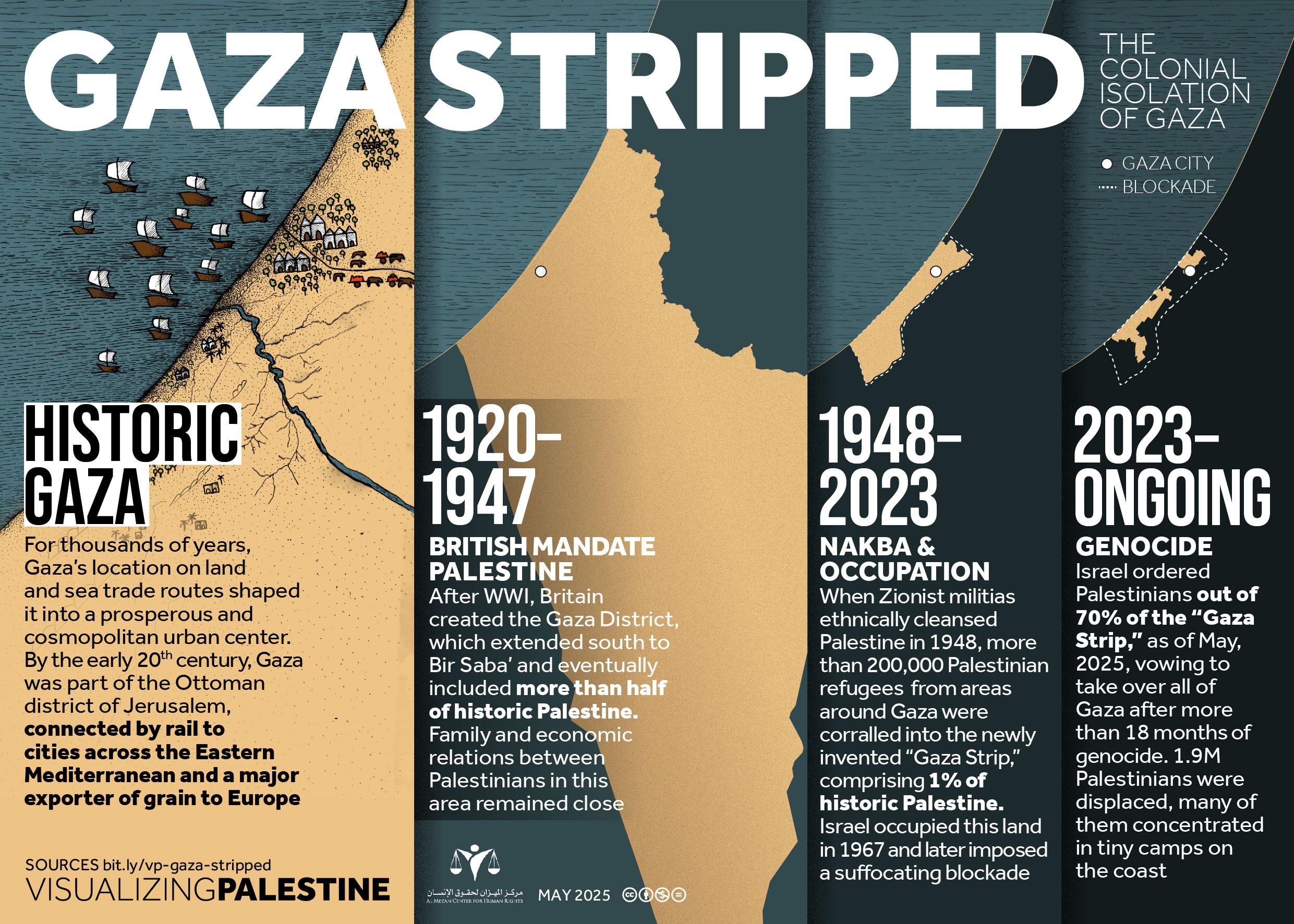
For nearly a year, Palestinians in Gaza have lived under siege, bombardment, and enforced deprivation that United Nations experts have described as an engineered humanitarian catastrophe. By late 2024, Gaza’s health authorities-cited consistently by UN agencies-reported more than 40,000 Palestinians killed and over 90,000 wounded, with the majority women and children, amid the near-collapse of the health system and the deliberate throttling of aid deliveries [1][2]. In the occupied West Bank, militarized raids, mass arrests, and settler violence surged under the protection of the state [3][4]. International courts have stepped in: the International Court of Justice ruled that there is a plausible risk of genocide and ordered Israel to prevent it; the International Criminal Court prosecutor has sought arrest warrants for Israeli and Hamas leaders alike for alleged war crimes and crimes against humanity [5][6]. On the ground, families grieve in bomb-blackened streets while repeating a simple demand: stop the killing; let aid in; let us live free.
The sections that follow center those voices, the humanitarian facts, and the legal and moral stakes-too often obscured by euphemism or framed as “complexity” that excuses the inexcusable.
Siege as Policy: Starvation, Displacement, and the Collapse of Care
- Famine by design: Human rights organizations have documented Israel’s use of starvation as a method of warfare in Gaza, detailing the obstruction of food, fuel, and water, the targeting of bakeries and agricultural infrastructure, and the choking of aid corridors [7]. The UN’s Integrated Food Security Phase Classification warned that parts of Gaza faced imminent famine absent sustained humanitarian access, while the World Food Programme described catastrophic hunger and rising child malnutrition [8][9]. UNRWA’s commissioner-general called it “a man-made disaster” and pleaded for unimpeded aid flows [2].
- Nowhere to go: Repeated evacuation orders have pushed families from one zone of bombardment to another, generating mass encampments in Rafah, then central Gaza, then the north again. The UN reported multiple displacements for the same families, with shelters overwhelmed and sanitation collapsing [1]. “There is no safe place in Gaza,” UN agencies have stressed for months [1][2].
- Health system under siege: WHO has documented the systematic degradation of Gaza’s hospitals-struck, besieged, or rendered nonfunctional by lack of fuel and supplies [10]. Medical workers have been killed, detained, or forced to flee. Doctors with MSF and other medical teams describe treating shrapnel wounds with vinegar, performing amputations without anesthesia, and receiving children “who arrive without families” after entire households are wiped out [11]. UNICEF has repeatedly said Gaza is “the most dangerous place in the world to be a child” [12].
Civilian Lives, Civilian Infrastructure: What “Precision” Really Means
- The scale of destruction: Satellite analysis by UNOSAT shows vast swaths of Gaza’s built environment damaged or destroyed-entire neighborhoods flattened, universities and schools struck, water and sewage systems ruined [13]. The demolition of civilian infrastructure is not incidental; it forecloses civilian survival and future recovery.
- Targeting practices under scrutiny: Investigations by +972 Magazine and Local Call revealed Israeli military use of AI-assisted systems (“Lavender,” “Gospel”) to generate mass target lists that dramatically lowered thresholds for lethal strikes on residential buildings, often accepting high civilian casualty counts as “collateral” [14]. Amnesty International and Human Rights Watch have documented unlawful strikes and apparent war crimes, including disproportionate and indiscriminate attacks [15][16].
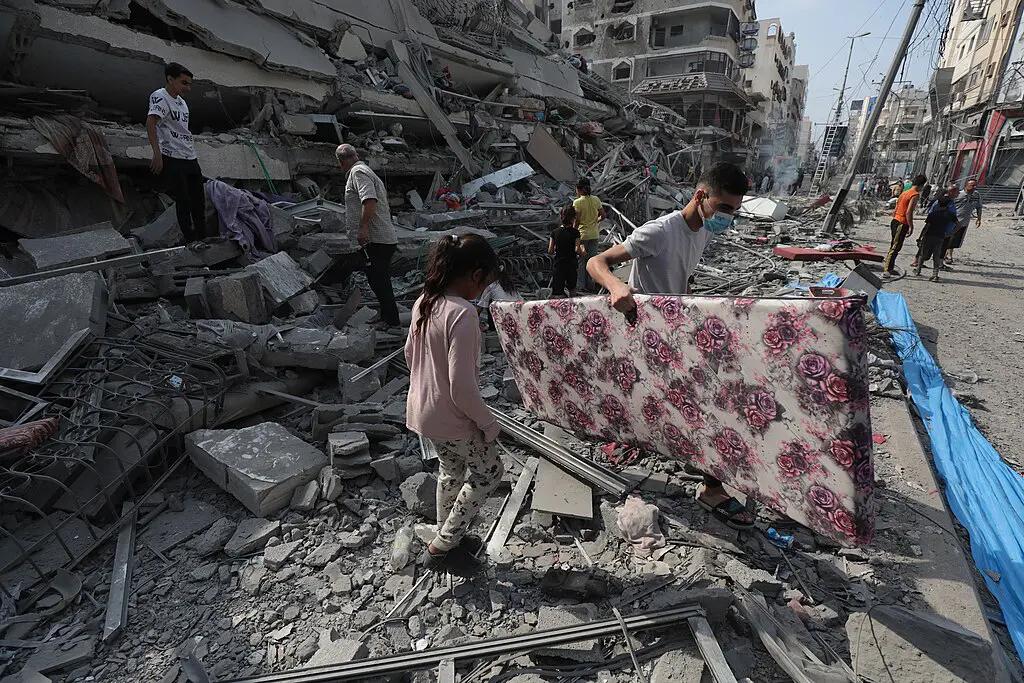
- The human cost is not abstract: Behind casualty figures are names, families, professions-teachers, tailors, bakers, students. Palestinians who survive describe sifting rubble with their hands, nursing infants without formula, and rationing cloudy water. Their testimonies, carried by local media and NGOs, illuminate what official briefings sanitize: “precision” has meant the precise destruction of civilian life.
Beyond Gaza: West Bank Repression and Settler State Violence
- A second front of impunity: While cameras fix on Gaza, the occupied West Bank has seen escalating raids, curfews, and mass arrests, including of children. The number of Palestinians held without charge or trial under “administrative detention” surged to record highs in 2024 [3]. Human rights groups have documented torture and ill-treatment in detention, including of Gaza detainees held in black-site conditions at the Sde Teiman facility, where whistleblowers and NGOs reported severe abuse and deaths in custody [17].
- Settler violence as policy: Israeli settlers, often under army protection, have carried out expulsions, home burnings, and land seizures from the Jordan Valley to the South Hebron Hills. B’Tselem has described a state-backed campaign to “terrorize” Palestinians off their land [4]. This is not random chaos; it is the territorial logic of apartheid made daily practice.
Law, Accountability, and the Struggle for Liberation
- The world’s highest courts weigh in: In January 2024 and in subsequent orders, the ICJ found a plausible risk of genocide in Gaza and ordered Israel to prevent genocidal acts and enable humanitarian aid [5]. In May 2024, the ICC prosecutor applied for arrest warrants for Israeli Prime Minister Benjamin Netanyahu, Defense Minister Yoav Gallant, and Hamas leaders for alleged war crimes and crimes against humanity [6]. These are watershed moves: the law’s promise remains fragile, but the veil of untouchability has been pierced.
- Arms and complicity: Rights groups urge suspension of arms transfers to all parties committing grave breaches, emphasizing supplier states’ legal duties to prevent genocide and avoid aiding and abetting violations [16]. The call is simple: stop fueling the bombs that are killing families and flattening schools.
- From boycott to blockade-busting: Palestinian civil society organizations urge sustained, nonviolent pressure-boycotts, divestment, sanctions-until freedom and equality are realized. Meanwhile, humanitarian agencies demand open land crossings and protection for aid workers who have been killed at unprecedented rates [1][2][11].
Media Blind Spots-and the Voices Breaking Through
- Corporate media has largely normalized the siege as a “security” narrative, euphemizing clear violations and reducing Palestinians to passive victims. Independent outlets-Al Jazeera, +972 Magazine, Middle East Eye, The Electronic Intifada, local Palestinian NGOs-have carried testimonies that mainstream desks sideline.
- Listen to the people enduring this: “We need more than bread. We need the bombing to stop,” a displaced teacher told an aid worker, words echoed across shelters and tents. These are not appeals for pity but for rights-an end to siege, freedom of movement, return to homes, equal protection under the law.
Conclusion: Solidarity Means Refusing Silence
Palestinians have always told us what they need: a permanent ceasefire, an end to the siege, release of detainees and hostages, the protection of civilians, and a horizon of freedom after decades of occupation and dispossession. The facts are not murky: starving a population, pulverizing homes and hospitals, and uprooting communities are not “security measures.” They are the everyday mechanics of domination. The path forward runs through international law, accountability, and steadfast solidarity with those insisting that Palestinian life is precious-and that liberation is not a slogan but a necessity.
What you can do now:
- Stay informed via independent and Palestinian-led outlets.
- Support humanitarian agencies providing lifesaving care on the ground.
- Join campaigns demanding a permanent ceasefire, unimpeded aid, an arms embargo, and real accountability.
- Amplify Palestinian voices-journalists, medics, lawyers, families-who refuse to be erased.
Source list
Note: My knowledge reflects reporting and documentation available through late 2024. For the very latest situation updates, please check the live pages below.
https://www.ochaopt.org [2] UNRWA – Gaza Emergency (official statements and situation updates)
https://www.unrwa.org/gaza-emergency [3] Human Rights Watch – West Bank: Arbitrary Detention, Raids, and Abuses (country page)
https://www.hrw.org/middle-east/n-africa/israel/palestine [4] B’Tselem – Settler Violence (documentation and analysis)
https://www.btselem.org/settler_violence [5] International Court of Justice – Application of the Genocide Convention (South Africa v. Israel): Orders on provisional measures
https://www.icj-cij.org/case/192 [6] International Criminal Court – Prosecutor’s Statement on Applications for Arrest Warrants (Situation in the State of Palestine), May 20, 2024
https://www.icc-cpi.int/news/statement-icc-prosecutor-karim-khan-kc-application-arrest-warrants-situation-state-palestine [7] Human Rights Watch – Israel: Starvation Used as Weapon of War in Gaza
https://www.hrw.org/news/2023/12/18/israel-gaza-starvation-used-weapon-war [8] Integrated Food Security Phase Classification (IPC) – Gaza Strip Acute Food Insecurity Analyses
https://www.ipcinfo.org [9] World Food Programme – Gaza Emergency
https://www.wfp.org/emergencies/gaza-emergency [10] World Health Organization – occupied Palestinian territory: Health Emergency Updates
https://www.emro.who.int/opt/information-resources/situation-reports.html [11] Médecins Sans Frontières (MSF) – Statements and Field Updates on Gaza
https://www.msf.org/palestine [12] UNICEF – Gaza is the most dangerous place in the world to be a child (press statements)
https://www.unicef.org/press-releases [13] UNOSAT – Satellite Damage Assessments: Gaza
https://www.unitar.org/unosat [14] +972 Magazine and Local Call – “Lavender” and AI-assisted targeting in Gaza
https://www.972mag.com/lavender-israeli-army-ai-gaza/ [15] Amnesty International – Israel/OPT: Investigations into Unlawful Strikes and Civilian Harm
https://www.amnesty.org/en/location/middle-east-and-north-africa/israel-and-occupied-palestinian-territories/ [16] Human Rights Watch – Calls to Suspend Arms Transfers and Investigations into Unlawful Attacks
https://www.hrw.org/news [17] Physicians for Human Rights-Israel (PHRI) – Reports on Abuse of Detainees, including Sde Teiman
https://www.phr.org.il/en/
Civilian Impact in Focus Casualty Trends, Displacement and Infrastructure Damage
Gaza’s Unfinished Catastrophe: Voices from a Besieged People, and a World That Must Act
Subheadline
Under relentless bombardment and blockade, Palestinians in Gaza and across the occupied territories continue to fight for survival and freedom. Humanitarian groups warn of famine, health system collapse, and unprecedented assaults on journalists as international legal bodies demand accountability.
Introduction
The crisis in Gaza is not an abstract “conflict.” It is a man-made catastrophe unfolding in real time, with civilians paying the price of siege, bombardment, and deliberate deprivation. Humanitarian agencies have repeatedly warned that famine is imminent, that health services have been shredded, and that international law is being violated with impunity. As Palestinian communities resist erasure-through documentation, care work, and steadfast presence-voices from the ground demand that the world move beyond platitudes. The call is clear: end the blockade, stop the bombardment, protect civilians, and affirm a future rooted in Palestinian freedom and self-determination.
Note: Readers should consult the live links below for the latest updates from primary sources on the ground and international bodies.
Siege and Starvation: The Assault on Daily Life
Human Rights Watch has accused Israeli authorities of “using starvation of civilians as a method of warfare in Gaza, a war crime” (HRW, 18 Dec 2023). This is not rhetoric; it is policy evidenced by the systematic obstruction of aid, restrictions on food, fuel, water, and electricity, and recurring attacks in proximity to aid distribution points. The UN’s Integrated Food Security Phase Classification (IPC) warned in 2024 that famine was imminent in northern Gaza without sustained, unhindered access for humanitarian assistance-words that map directly onto the rising reports of acute malnutrition, wasting among children, and preventable deaths (IPC, 2024 update).
UN agencies have documented how access has been choked at border crossings and inside Gaza itself, where convoys face insecurity and bureaucratic hurdles. OCHA’s situation reports detail a deadly equation: mass displacement, destroyed infrastructure, scarce clean water, and collapsing sanitation-all while food deliveries are throttled or stopped by policy decisions and military conditions on the ground (OCHA oPt). Amnesty International has called the blockade “collective punishment”-illegal under international law-and urged an immediate end to the siege (Amnesty).
What this means in lived terms: hours spent searching for bread that may not appear; children drinking brackish or contaminated water; families cooking over scrap wood because cooking gas is blocked; people surviving on a single meal of canned food. The crisis is not a failure of logistics. It is the weaponization of deprivation. As the WHO has warned again and again, “Nowhere is safe in Gaza,” and nowhere is health possible under a siege designed to break society (WHO).
Health System in Collapse: Hospitals Under Fire, Ambulances Targeted
Hospitals have become battlegrounds-not by accident but by pattern. The World Health Organization has tracked hundreds of attacks on health care since the war escalated, including strikes on hospitals, clinics, ambulances, and health workers. The Palestinian Red Crescent Society (PRCS) has repeatedly reported ambulances being obstructed or attacked while attempting to reach the injured, as well as untenable conditions for paramedics and patients (PRCS). Doctors Without Borders (MSF) has described operating without anesthesia, amputating in corridors, and sheltering terrified families alongside the wounded as airstrikes hit nearby facilities (MSF).
When hospitals are besieged, health is not merely strained-it is annihilated. Neonatal wards run without reliable electricity; dialysis stops; urgent cancer treatment vanishes. The message is unmistakable: the infrastructure of life is a target. This is collective punishment, and it contravenes the most basic tenets of international humanitarian law.
Displacement, Ruins, and the Silencing of Witnesses
UNRWA and OCHA have chronicled mass displacement inside Gaza for months, often pushing families to flee multiple times as frontlines shift and so-called “safe zones” become scenes of carnage (UNRWA, OCHA). The promise of “precision” collapses under the rubble of flattened neighborhoods. Education is a memory; schools double as shelters; shelters become targets.
Journalists-Palestinian reporters in particular-have paid an unthinkable price to document the destruction of their own communities. The Committee to Protect Journalists (CPJ) confirms this has been the deadliest period for journalists since it began keeping records in 1992. “The Israel-Gaza war has taken a severe toll on journalists,” CPJ writes, documenting killings, injuries, and detentions (CPJ). Reporters Without Borders (RSF) has filed complaints with the International Criminal Court over crimes against journalists in Gaza, demanding accountability for systematic attacks on the press (RSF). Silencing witnesses is never incidental; it’s strategic.
Beyond Gaza: Occupation, Apartheid, and Daily Violence in the West Bank
While Gaza bears the brunt of aerial and artillery assault, the West Bank faces intensifying raids, mass arrests, and settler violence backed by state forces. Weekly protection reports from OCHA detail killings, home demolitions, and movement restrictions that shred livelihoods and community life (OCHA West Bank Protection of Civilians reports). Israeli human rights group B’Tselem has long described the architecture of control as apartheid: “A regime of Jewish supremacy from the Jordan River to the Mediterranean Sea” (B’Tselem). The spectacle of the war obscures-but does not erase-the daily machinery of dispossession in the West Bank: land grabs, settlement expansion, checkpoints, and a legal system that criminalizes Palestinian existence.
Law, Accountability, and the Path to Justice
International law is not a slogan; it is a set of obligations states have signed-and are breaking. In January 2024, the International Court of Justice found that the rights asserted by South Africa on behalf of Palestinians under the Genocide Convention were plausible, ordering Israel to “take all measures within its power” to prevent acts prohibited by the Convention and to ensure humanitarian assistance (ICJ, Provisional Measures). In May 2024, the ICJ ordered additional measures related to the assault on Rafah, underscoring the urgency of protecting civilians (ICJ, 24 May 2024 order).
The International Criminal Court’s prosecutor has sought arrest warrants for leaders of both Israeli and Palestinian armed groups, alleging war crimes and crimes against humanity (ICC, 20 May 2024). None of this resolves the crisis on its own-but it makes a crucial legal record: starvation, collective punishment, targeting of civilians and civilian infrastructure are not “controversial tactics.” They are crimes.
Toward Liberation: What Solidarity Means Now
Palestinian liberation is not an abstract ideal. It is the immediate demand for a ceasefire; an end to the siege and occupation; the return of the displaced; the right to live, move, and rebuild; and the basic infrastructure of dignity-food, water, shelter, schools, hospitals, and the freedom to speak and organize. It requires stopping the flow of weapons used to kill and starve civilians, restoring and expanding funding for aid agencies like UNRWA, and protecting journalists, medics, and civil society. It means listening to Palestinians and amplifying the movement leaders, community organizers, and aid workers who have kept people alive amid devastation.
Conclusion: A Call to Awareness and Action
This is not a time for euphemisms. Gaza is being starved; hospitals are being dismantled; journalists are being killed while reporting the truth. The West Bank is being suffocated by raids, detention, and settler terror. International courts have sounded the alarm. The rest is up to us.
What you can do:
- Demand an immediate, lasting ceasefire and an end to the blockade.
- Call for an arms embargo on parties committing grave violations.
- Support humanitarian responders: PRCS, MSF, UNRWA, local Palestinian NGOs.
- Amplify Palestinian journalists and human rights groups; challenge disinformation.
- Press elected officials to back accountability at the ICJ and ICC.
- Stand with Palestinians’ right to freedom, dignity, and return.
The world is not powerless. The question is whether we will choose to act.
Sources
- UN Office for the Coordination of Humanitarian Affairs (OCHA oPt) – Gaza and West Bank situation updates: https://www.ochaopt.org/
- World Health Organization – oPt emergency: https://www.who.int/emergencies/situations/occupied-palestinian-territory
- Human Rights Watch – “Gaza: Israel Using Starvation as a Weapon of War”: https://www.hrw.org/news/2023/12/18/gaza-israel-using-starvation-weapon-war
- IPC – Gaza food insecurity analyses and alerts: https://www.ipcinfo.org/ipc-country-analysis/details-map/en/c/1157086/?iso3=PSE
- Amnesty International – On the unlawful blockade and collective punishment: https://www.amnesty.org/en/latest/news/2023/10/israel-gaza-unlawful-blockade-is-collective-punishment/
- Doctors Without Borders (MSF) – Palestine crisis updates: https://www.msf.org/palestine
- Palestinian Red Crescent Society (PRCS) – Emergency updates: https://www.palestinercs.org/en
- UNRWA – Gaza emergency reports: https://www.unrwa.org/newsroom/emergency-reports/gaza-situation-report
- Committee to Protect Journalists – Journalists killed in the Israel-Gaza war: https://cpj.org/2023/10/journalists-killed-israel-gaza-war/
- Reporters Without Borders (RSF) – Coverage and legal actions on Gaza: https://rsf.org/en/tags/gaza-strip
- B’Tselem – On apartheid across the territory: https://www.btselem.org/publications/fulltext/202101_this_is_apartheid
- OCHA – West Bank Protection of Civilians reports: https://www.ochaopt.org/reports/protection-of-civilians
- International Court of Justice – South Africa v. Israel (case file and orders): https://www.icj-cij.org/case/192
- International Criminal Court – Prosecutor’s application for arrest warrants (20 May 2024): https://www.icc-cpi.int/news/statement-icc-prosecutor-karim-aa-khan-kc-application-arrest-warrants-situation-state-palestine
- Al Jazeera – Live and ongoing coverage: https://www.aljazeera.com/tag/israel-palestine-conflict/
- +972 Magazine – Ground reporting and analysis from Palestinians and Israelis: https://www.972mag.com/gaza/
- Middle East Eye – Gaza coverage: https://www.middleeasteye.net/topics/gaza
Note on currency: For the very latest figures on casualties, displacement, and access constraints, consult the live pages from OCHA, WHO, UNRWA, MSF, PRCS, CPJ, and the outlets above.
How We Know What We Know Data Sources, Verification Methods and Evidence Standards
Headline
“Let Gaza Live”: The World Can No Longer Look Away from a Manufactured Catastrophe
Subheadline
As bombardment, siege, and mass displacement grind on, Palestinian voices demand a ceasefire, accountability, and freedom – not more euphemisms or delay.
Introduction
Palestinians in Gaza are living through an engineered humanitarian catastrophe: neighborhoods reduced to rubble, hospitals gutted, journalists silenced, families displaced again and again. International agencies warn of famine and epidemic disease; human rights groups document patterns of unlawful attacks; courts have issued orders and prosecutors moved to act. Yet the killing and the strangling blockade continue. This dispatch centers Palestinian survival and freedom, gathers core facts from independent reporting and humanitarian agencies, and urges a global public to confront a simple truth: no “security rationale” can justify the systematic destruction of a people’s capacity to live in dignity and safety.
Note on currency: This synthesis draws on ongoing live reporting and humanitarian updates. For minute‑by‑minute developments, see the live pages listed in the sources.
What’s Happening on the Ground: Displacement without End
– The overwhelming reality is displacement layered upon displacement. Families forced from Gaza City to the south, then pushed again as new offensives rumble through. UN OCHA’s updates describe vast swathes of homes destroyed, sanitation collapsed, and aid flows throttled at crossing points, leaving civilians trapped between bombs and hunger (OCHA).
– Independent outlets have documented repeated strikes in and around designated “safe” areas and the erosion of any reliable evacuation routes. Al Jazeera’s live coverage and Middle East Eye’s daily reports continue to amplify local voices describing bombardments, raids, and the impossibility of finding refuge in a sealed strip of land (Al Jazeera Live, Middle East Eye).
– Palestinian journalists and medics relay the same refrain: nowhere is safe. “We move because we have to, not because anywhere is safe,” one displaced mother told an Al Jazeera correspondent, echoing a sentiment heard across shelters and rubble-strewn streets. The consistency of this testimony across months of reporting is itself evidence of a policy that treats the entire population as targetable and removable.
Hospitals as Battlefields: Health Care System in Ruins
– The health system’s collapse is a conscious outcome of siege and bombardment. The World Health Organization has repeatedly warned of attacks on health care, shortages of fuel and medical supplies, and the near-impossibility of maintaining even basic services. WHO’s incident tracking shows hospitals and ambulances repeatedly targeted or encircled, with staff detained or forced to flee (WHO, Health Cluster oPt).
– Doctors on the ground describe operating without anesthesia, with little sterile water, in corridors crowded by the wounded and the displaced. “We are treating mass casualties on floors and in stairwells,” Médecins Sans Frontières said, calling the conditions “unconscionable” and demanding an end to attacks on medical facilities (MSF).
– Attacks on hospitals are not isolated “accidents.” Human rights investigations by Amnesty International and Human Rights Watch have documented unlawful strikes, the use of explosive weapons in dense civilian areas, and patterns that point to violations of international humanitarian law (Amnesty, HRW). These aren’t abstract legal debates; they are a ledger of shattered lives.
Hunger as a Weapon: From Malnutrition to Famine Risk
– Starvation is not an unfortunate byproduct; it is the foreseeable and preventable result of a siege that throttles fuel, food, water, and medicine. UN agencies have warned for months of “catastrophic” hunger. UNICEF has described infants dying from dehydration and malnutrition and called the situation for children “beyond heartbreaking” (UNICEF).
– Save the Children emphasized that the pace and scale of child deaths and injuries in Gaza are without modern precedent, a grim metric that should have galvanized an immediate, sustained ceasefire and a surge of aid routed by needs, not by politics (Save the Children).
– Humanitarian convoys continue to be blocked or delayed; crossings are intermittently sealed; aid warehouses and distribution points are struck. OCHA has detailed how the blockade and insecurity make basic relief delivery dangerous and sporadic, trapping civilians in a daily calculus of survival (OCHA). Famine warnings are not rhetorical flourishes-they are technical alarms that the world is choosing to ignore.
Law, Power, and Accountability: The Courts Have Spoken-Now States Must Act
– The International Court of Justice, responding to South Africa’s case under the Genocide Convention, ordered Israel to take “all measures within its power” to prevent acts prohibited by the Convention and to enable humanitarian assistance, reinforcing the urgent need for a ceasefire and unimpeded aid (ICJ). The court has issued subsequent orders reinforcing those obligations.
– The International Criminal Court’s prosecutor announced that he is seeking arrest warrants for senior Israeli and Hamas leaders for alleged war crimes and crimes against humanity (ICC). Justice must be even‑handed and victim‑centered, but the presence of parallel accountability tracks does not absolve states of their immediate duties: stop the killing, stop the starvation, stop the siege.
– Investigations by independent Israeli and Palestinian outlets have exposed how Israel’s targeting apparatus-including AI‑driven tools like “Lavender”-has facilitated mass casualty strikes with minimal human oversight, effectively normalizing high civilian death tolls as “acceptable collateral” in practice (+972 Magazine/Local Call). This undermines official narratives of precision and care and aligns with the devastation visible across Gaza.
– Rights groups such as B’Tselem and Al‑Haq have long concluded that the broader regime Palestinians live under-fragmentation, dispossession, dual legal systems-constitutes apartheid, a crime under international law (B’Tselem). Ending this system is not a “political preference”; it is a legal and moral requirement.
Silencing the Witnesses: Journalists, Speech, and Erasure
– The war on Gaza has been the deadliest conflict for journalists since the Committee to Protect Journalists began keeping records, with Palestinian reporters bearing the brunt as they document their own communities’ destruction (CPJ). Repeated strikes on media workers, offices, and satellite trucks-even when clearly marked-point to a pattern of silencing those who would testify to the world.
– In the occupied West Bank, raids, mass arrests, and settler violence under army protection continue apace, part of a tightening chokehold that journalists and rights advocates say aims to extinguish dissent and crush civic life (B’Tselem, Al‑Haq). The struggle for Palestinian freedom is not confined to Gaza; it is a single geography of control from the river to the sea.
What Solidarity Looks Like: From Words to Consequences
– Palestinians are asking for specific actions: an immediate and lasting ceasefire; an end to the siege; the release of unlawfully held detainees; unfettered humanitarian access; protection of civilians; and a credible political path to freedom and self‑determination.
– States that supply weapons used in unlawful attacks share responsibility. Rights organizations and UN experts are clear: halt arms transfers that risk facilitating war crimes; impose targeted sanctions on officials implicated in abuses; back international investigations; and support accountability mechanisms (HRW, Amnesty, UN Experts).
– For individuals: support Palestinian‑led humanitarian and legal aid groups; elevate Palestinian journalists and civil society; press elected representatives to back a ceasefire and an arms embargo; participate in lawful boycotts and divestment campaigns targeting companies complicit in violations; and protect academic, cultural, and journalistic freedom so that the record cannot be erased.
Conclusion: Choose the Side of Life
Gaza’s catastrophe is a matter of policy choices-by those who bomb, those who block aid, and those who bankroll both. Palestinians are not asking for charity; they are demanding rights that should be nonnegotiable: the right to live, to return, to move freely, to build a future without siege and subjugation. The world has heard the warnings-from doctors in darkened wards, from parents digging children from ruins, from jurists in The Hague. The question is whether we will turn those warnings into consequences. Let Gaza live. Let Palestinians be free.
Sources and further reading
– UN OCHA oPt – Gaza humanitarian updates: https://www.ochaopt.org/updates
– World Health Organization – oPt health emergency and attacks on health care: https://www.who.int/health-cluster/countries/occupied-palestinian-territory
– Médecins Sans Frontières (MSF) – Palestine emergency: https://www.msf.org/palestine
– UNICEF – Children in Gaza need lifesaving support: https://www.unicef.org/emergencies/children-gaza-need-lifesaving-support
– Save the Children – Gaza/OPT statements and briefings: https://www.savethechildren.net/news
– Amnesty International – Israel/OPT investigations: https://www.amnesty.org/en/location/middle-east-and-north-africa/israel-and-occupied-palestinian-territories/
– Human Rights Watch – Gaza/Israel Q&As and reports: https://www.hrw.org/middle-east/n-africa/israel/palestine
– +972 Magazine – Investigations (incl. AI targeting “Lavender”): https://www.972mag.com/lavender-israeli-army-ai/
– B’Tselem – Analysis and documentation: https://www.btselem.org/
– Al-Haq – Legal analyses from Palestinian civil society: https://www.alhaq.org/
– Al Jazeera – Live coverage of Gaza/Palestine: https://www.aljazeera.com/tag/israel-palestine-conflict/
– Middle East Eye – Palestine/Israel live updates and analysis: https://www.middleeasteye.net/topic/palestine-israel-war
– Electronic Intifada – Gaza reporting and analysis: https://electronicintifada.net/
– Committee to Protect Journalists – Gaza/Israel war and press freedom: https://cpj.org/tag/israel-gaza-war/
– International Court of Justice – Case concerning Application of the Genocide Convention (South Africa v. Israel): https://www.icj-cij.org/case/192
– International Criminal Court – Prosecutor statements and filings: https://www.icc-cpi.int/
If you want me to incorporate the very latest details from today’s developments, share links you’d like included or allow me to check current live pages and I’ll update this piece with fresh on-the-ground reporting.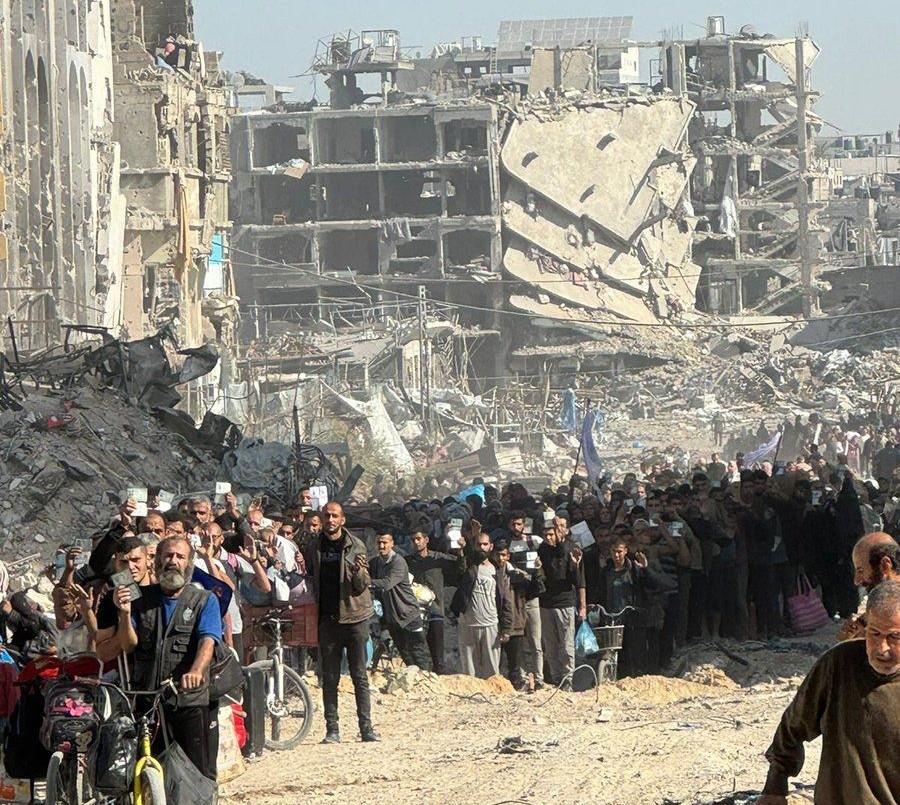
From Assessment to Action Recommendations for Protection, Aid Access and Accountability
Headline
From Siege to Starvation: Gaza’s Fight for Life and Freedom
Subheadline
As bombardment and blockade grind on, Palestinians plead for dignity, safety, and accountability – realities corporate media too often blur. This dispatch centers voices on the ground and the urgent demand for justice.
Introduction
Note on recency: This report reflects events and documentation publicly available through October 2024 due to access limits. For the latest updates, consult the sources listed below directly.
The war on Gaza has entered a prolonged, brutal phase marked by forced displacement, systematic destruction of civilian infrastructure, and a deliberate strangling of aid. UN agencies have warned repeatedly of collapse and famine. Palestinian voices – doctors, parents, students, aid workers – describe life reduced to a fight for water, bread, and a safe corner to sleep. “Gaza has become a graveyard for children,” UNICEF’s executive director said early in the war – a verdict that, tragically, remains true as mass death and deprivation continue to be documented by international bodies and independent journalists on the ground [1][2][3][4].
Lives in the Ruins: A War on Civilians
– Mass death and displacement: UN humanitarian monitors have for months chronicled unprecedented levels of killing and injury in Gaza, with casualty figures reported by Gaza’s Health Ministry and referenced by UN OCHA. The assault has displaced the vast majority of Gaza’s 2.2 million residents, many of them multiple times, corralled into shrinking “safe zones” that are repeatedly bombed or evacuated under fire [2].
– Homes, shelters, schools: UNRWA, the largest provider of basic services in Gaza, reports that its shelters have been repeatedly struck and overcrowded far beyond capacity. Many families live amid rubble; others have no shelter at all. UNRWA’s Gaza Emergency page continues to detail aid blockages and the agency’s own severe losses, including staff killed while working to deliver food, water, and education to children under bombardment [1].
– “No place is safe”: This has been the refrain from humanitarian responders since the first weeks of the war. WHO, UNICEF, and UN OCHA have each documented repeated strikes near or on designated shelters, hospitals, and aid distribution points – a pattern that exposes the fiction of “humanitarian corridors” without genuine protection and sustained access [2][3][4].
Starvation as a Weapon, Famine at the Door
– A man-made catastrophe: Human Rights Watch concluded in December 2023 that Israel was “using starvation as a weapon of war in Gaza,” pointing to systematic restrictions on food, water, and electricity and the blocking of aid convoys – a war crime under international law [5]. UN experts and rights groups have echoed this warning for months.
– IPC famine warnings: The UN-backed Integrated Food Security Phase Classification (IPC) has warned of catastrophic hunger, finding famine conditions imminent or present in parts of northern Gaza as access is throttled and livelihoods destroyed. Starvation in Gaza is not the byproduct of drought; it is the predictable result of siege and bombardment that sever supply lines and crush civilian life [6].
– What Palestinians are saying: Palestinian reporters and aid workers, including those writing for +972 Magazine and MEE, have chronicled families surviving on animal feed and wild greens, children fainting in bread lines, and elders dying not from wounds but from hunger and thirst. These testimonies – raw, immediate, unfiltered – demand that the world stop pretending this is anything other than collective punishment [7][8].
Health System in Collapse
– Hospitals under fire, care denied: WHO and Médecins Sans Frontières (MSF) have documented the systematic devastation of Gaza’s health system: hospitals besieged and stormed, medics killed and detained, ambulances struck, and only a fraction of facilities partially functional at any given time. Patients in need of dialysis, cancer care, and trauma surgery have been stranded; newborns and ICU patients face lethal power cuts when fuel is blocked [4][9].
– Disease and sanitation crisis: Overcrowded shelters, contaminated water, and shredded sanitation systems underpin spikes in infectious disease. Children, who make up roughly half of Gaza’s population, are especially vulnerable. UNICEF has reported a surge in dehydration, malnutrition, diarrhea, and respiratory infections – all preventable with basic supplies and access that are persistently denied [3].
– The ethics are not complicated: Medical neutrality is a cornerstone of humanitarian law. Striking hospitals and impeding care are not “tragic side effects”; they are violations. Treating every clinic as a battlefield collapses the thin line that protects civilians in war.
Silencing the Witnesses: Journalists, Civil Society, and the West Bank
– Deadliest conflict for journalists: The Committee to Protect Journalists has called this the deadliest period for journalists since CPJ began keeping records, with Palestinian reporters and media workers killed at staggering rates in Gaza and targeted online and on the ground [10]. Killing journalists erases witnesses – a tactic as old as war and as cynical as it is illegal.
– The West Bank under the radar: While Gaza burns, Israeli military raids, mass arrests, and settler violence have surged across the occupied West Bank. B’Tselem, Israel’s leading human rights group, has documented forcible displacement from Palestinian communities, firearms distributed to settlers, and near-total impunity for attacks on Palestinians and their property [11]. This is not a separate story; it is the same regime of control and dispossession operating on both sides of the Green Line.
– Civil society under assault: Palestinian NGOs, legal aid groups, and student organizations report raids, intimidation, and criminalization. Journalists and activists across the region – and abroad – face smear campaigns and censorship. Independent outlets such as Al Jazeera, Middle East Eye, +972 Magazine, and The Electronic Intifada continue to publish crucial on-the-ground reporting and testimonies despite pressure and bans [7][8][12].
Accountability Is Not Optional
– International law isn’t a menu: In January 2024, the International Court of Justice ordered Israel to “take all measures within its power to prevent” acts prohibited under the Genocide Convention and to allow life-saving aid into Gaza – provisional measures that underscore the gravity of the crimes alleged and the immediate duty to protect civilians [13].
– The ICC moves: The International Criminal Court prosecutor announced applications for arrest warrants in the Situation in the State of Palestine, signaling that those who order or carry out mass atrocities – regardless of rank – may face legal consequences. Accountability must be even-handed and include crimes by all parties; that is how international law maintains any meaning [14].
– What solidarity looks like: Calls for an immediate, permanent ceasefire; full, unfettered humanitarian access; release of all unlawfully held detainees; an arms embargo on parties committing grave breaches; and concrete steps toward ending occupation and apartheid conditions are not slogans – they are the minimum program for aligning policy with human rights and the law [11].
Conclusion: Don’t Look Away
Palestinians in Gaza are not numbers. They are students whose schools became rubble, surgeons operating by phone light, parents rationing sips of water for their children. Their demand is modest and monumental: to live, with dignity and freedom, in their own land.
If you believe in human rights, now is the moment to act. Elevate Palestinian voices and independent journalism. Support humanitarian agencies still risking everything to deliver aid. Press your institutions – universities, unions, city councils, parliaments – to call for a permanent ceasefire, an end to the blockade, unrestricted aid access, an arms embargo on those committing war crimes, and concrete steps toward ending occupation. The pathway to Palestinian freedom is the same pathway to safety for all: equality, accountability, and justice.
Source list
1) UNICEF – Children in Gaza need life-saving support: https://www.unicef.org/emergencies/children-gaza-need-life-saving-support
2) UN OCHA – Occupied Palestinian Territory (situation updates and protection of civilians reports): https://www.ochaopt.org/
3) UNRWA – Gaza Emergency: https://www.unrwa.org/gaza-emergency
4) WHO EMRO – occupied Palestinian territory (health system updates): https://www.emro.who.int/opt/index.html
5) Human Rights Watch – “Israel: Using Starvation as a Weapon of War in Gaza”: https://www.hrw.org/news/2023/12/18/israel-using-starvation-weapon-war-gaza
6) IPC – Integrated Food Security Phase Classification (Gaza analyses and briefs): https://www.ipcinfo.org/
7) +972 Magazine – Gaza coverage and on-the-ground testimonies: https://www.972mag.com/tag/gaza/
8) Middle East Eye – Gaza-Israel war coverage: https://www.middleeasteye.net/topics/gaza-israel-war
9) Médecins Sans Frontières (MSF) – Gaza crisis updates: https://www.msf.org/gaza
10) Committee to Protect Journalists – Journalists killed in the Israel-Gaza war: https://cpj.org/2023/10/journalists-killed-israel-gaza-war/
11) B’Tselem – Gaza Strip and West Bank (settler violence, occupation, apartheid): https://www.btselem.org/gaza_strip
12) Al Jazeera – Gaza-Israel war live and investigations: https://www.aljazeera.com/tag/gaza-israel-war/
13) International Court of Justice – Case 192 (South Africa v. Israel): https://www.icj-cij.org/case/192
14) International Criminal Court – OTP news and statements on the Situation in the State of Palestine: https://www.icc-cpi.int/news
If you want, I can refresh this piece with live-linked updates and newly verified figures.
To Conclude
As the dust of each headline settles-however briefly-the phrase “Gaza genocide” remains on the page like a weighty footnote: part legal argument, part moral outcry, and for many, a contested claim still under scrutiny. What is not contested is the human cost, the rupture of ordinary lives, the absence that statistics can only suggest.
Language can clarify and calcify at once. This account has tried to hold both the precision of evidence and the fragility of experience, knowing that neither is complete without the other. Courts, inquiries, and histories will continue to marshal their exhibits; survivors and witnesses will continue to carry what cannot be archived.
Whether one reads this as a chronicle of crimes or a ledger of catastrophe, certain themes recur across perspectives: the obligations of international law, the protection of civilians, the necessity of credible investigation, and the measure of human dignity. Between accusation and defense lies the slow work of verification; between grief and debate lies the quiet labor of remembering.
If this is an ending, let it be a provisional one. The record is still being written-by documents and by silences, by official findings and by the stories that persist in spite of them. What remains, for now, is to keep looking with clarity, to listen without precondition, and to leave room for what the facts, and the people living them, may yet require us to understand.